Get Full Government Meeting Transcripts, Videos, & Alerts Forever!
Get email alerts on the Legislative Ethics topic
No spam. Unsubscribe anytime.
Senate votes 44-6 to punish senator from District 43; removes committee assignments and limits access
Summary
The Montana Senate voted 44-6 to impose a set of sanctions on a senator from Senate District 43 under Article V authority, removing committee assignments, restricting office access and limiting in-person contacts after debate about ethics findings and prior allegations.
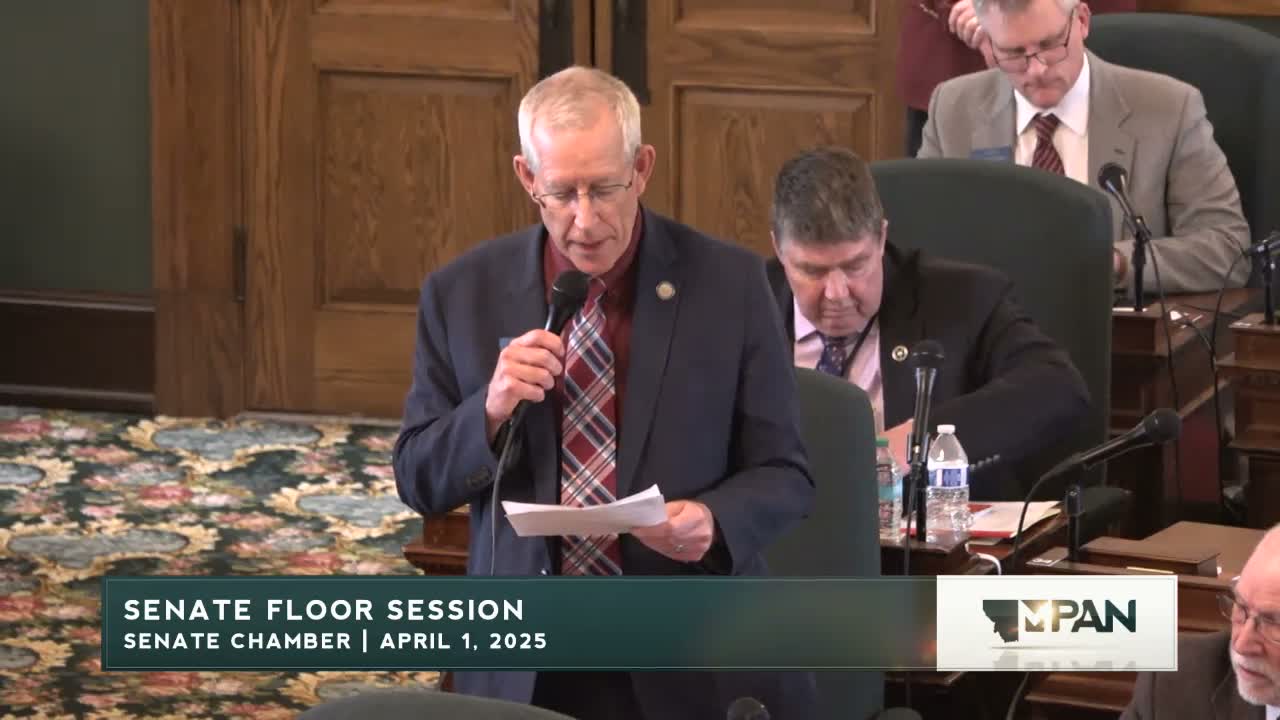
The Montana Senate voted 44-6 on April 1 to impose formal sanctions on the senator from Senate District 43 under Article V of the state constitution. The motion, offered by Majority Leader McGilvray, removes the senator from Senate standing committees and interim committee appointments, restricts his in-person contact with executive-branch directors and legislative staff (allowing only written correspondence unless first contacted), limits access to legislative services and office space, permits remote voting on specified matters, and rescinds certain senatorial privileges.
McGilvray, in opening remarks, cited a series of prior incidents and findings that he said justified the action, including an FTC civil penalty reported in committee records, two traffic-stop incidents and ethical findings related to contract disclosures. ‘‘We have had a pattern of abuse that needs to be addressed by this body,’’ McGilvray said, urging senators to approve the sanctions.
Several senators debated the scope of punishment. Senator Mandeville moved as a substitute that the senator be expelled outright; that substitute motion failed on a tied vote, 25-25. Minority Leader Flowers said he supported a censure and described the adopted sanctions as a compromise that both marks the offense and preserves institutional fairness. Senator Pope urged a measured approach and opposed expulsion, calling the sanctions ‘‘judicious and explicit.’’
After the final vote, the clerk recorded 44 yes and 6 no. The motion’s passage implements the specified restrictions for the 2025-26 biennium unless the Senate later amends the action. The Senate’s formal record lists the motion under the constitutional authority to punish, with penalties and procedural limits spelled out on the floor.
The senate also debated earlier today whether this action should be expulsion; the substitute expulsion motion failed. Senators who opposed the majority motion said they were uneasy about process fairness and the ability to seek other remedies.
The Senate will file the formal order in the journal and notify the affected senator and relevant legislative offices of the operational details and access limitations.