Get Full Government Meeting Transcripts, Videos, & Alerts Forever!
Get email alerts on the Detention Facility topic
No spam. Unsubscribe anytime.
Commissioners authorize planning, finance study for new detention facility; advisors outline bond and tax-note options
Summary
After a presentation by PFM Financial Advisors, the court authorized county financial advisors and bond counsel to work with appointees and the sheriff to develop a plan for a new or renovated detention facility, including finance options that could use lease-revenue bonds or tax notes to limit tax-rate impacts.
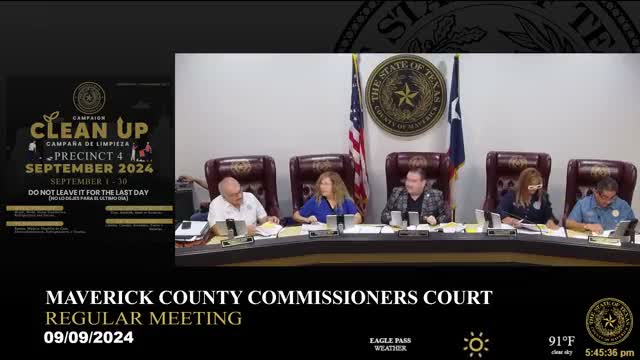
Maverick County Commissioners Court on Sept. 9 authorized the county’s financial advisor and bond counsel to begin detailed planning and a plan of finance for a proposed detention facility.
David Gonzalez of PFM Financial Advisors presented scenarios for issuing tax notes at $5 million, $7 million and $10 million (7-year terms) and explained how the county’s existing debt-service reserve (about $800,000) and debt retirements in 2026–27 could offset tax-rate impacts. "If you issue $5,000,000 at a 4.25% interest rate, you're looking at no tax-rate impact," Gonzalez said during his slide presentation. He showed that a $7 million issuance would have a small rate effect (on the order of a few thousandths of a dollar per $100 valuation) and that $10 million would produce a larger but structured increase.
Bond counsel explained lease-revenue bonds and the use of a public facility corporation (a county alter ego) as alternatives to a general-obligation tax bond, noting lease-revenue debt is repaid from pledged facility revenues rather than a tax levy. The counsel recommended a broad meeting with the sheriff's office and county officials to define needs and to pursue design-build or construction-manager-at-risk teams once the county determines scope.
The court directed its financial advisor and bond counsel to work with a committee (including the judge and selected commissioners, the sheriff, and auditor representatives) to develop a plan of needs and return with recommendations; the motion passed unanimously.
Why it matters: The discussion moves the county from concept to a structured planning phase and identifies finance options intended to limit or control tax-rate impacts while addressing an aging jail facility that commissioners described as costly to maintain.
Next steps: The county will form the committee, scope requirements with the sheriff, seek federal contract commitments if applicable, engage design-build teams as appropriate, and return with an RFP or recommendations for the court's approval.