Get Full Government Meeting Transcripts, Videos, & Alerts Forever!
Get email alerts on the Building Codes topic
No spam. Unsubscribe anytime.
Oak Grove reviews Chapter 500 building-code overhaul, targets January 2025 implementation
Summary
City staff presented proposed updates to Chapter 500 of Oak Grove's building codes, outlining inspection workloads, new site requirements (dumpsters, portable toilets, expanded ice-and-water barrier), a proposed TCO fee and a schedule for a first reading on Sept. 3 and final adoption in December for a Jan. 2025 effective date.
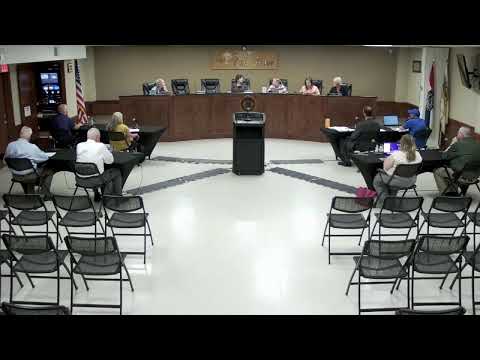
Oak Grove city staff on Aug. 19 presented proposed amendments to Chapter 500 of the municipal building codes and told the Board of Alderwomen the changes would begin a 90-day state review before a December adoption and a likely January 2025 effective date.
Justin, the city's building official, briefed the board on the proposed package and the department's capacity, saying inspections for a typical house require "probably about anywhere between 12 hours and 15 hours' worth of time." He explained the city uses an outside contractor (IBTS) for busy weeks and for commercial and multifamily plan review but that most single-family inspections remain in-house.
The draft ordinance adds several site-and-construction requirements. Justin said the code expands an ice-and-water barrier requirement (noting a 24-inch baseline and an additional 36 inches around roof penetrations), requires a construction refuse/bin or shared container at building sites, and includes portable-toilet provisions. He described the refuse requirement as intended to stop construction debris from being dumped in the right-of-way. "No more just throwing it on the ground," Justin said.
On occupancy and landscaping, staff proposed tying escrow to final occupancy: a Certificate of Occupancy (CO) would remain free, but a Temporary Certificate of Occupancy (TCO) to allow occupancy before landscaping is finished would carry a proposed $100 processing fee and require escrow for sod and landscaping until the work is completed. Justin said staff would examine processes to ensure escrows are released only after a complete CO is issued.
Board members asked about related topics that fall outside Chapter 500: accessory dwelling units (ADUs), lot-size minimums, and parking standards. Justin said ADUs and zoning questions would be handled through the unified development code and zoning processes. He noted Oak Grove's R-1 minimum was historically large (about 9,000 square feet) and that changing minimums would require rezoning, public hearings and notifications to property owners.
Sidewalk placement and accessibility also drew questions. Aldermen raised concerns that the proposed placement (about 4'5 feet back from the curb) could reduce driveway depth in older neighborhoods; Justin explained the setback helps align sidewalks across future builds, preserves space for utilities and keeps storm-box lids out of the walking surface, and said the board could revisit the requirement.
Staff laid out a schedule: the city planned a first reading on Sept. 3, a 90-day review period under state statute, a final reading and adoption at a Dec. 2 meeting, and implementation in January 2025. Justin said the draft code books will be made available online for public review and that builders will be notified to offer feedback during the review period.
The presentation was informational; the board did not take formal action that night. The proposal will return for formal readings and public comment under the city's ordinance-adoption timeline.