Get Full Government Meeting Transcripts, Videos, & Alerts Forever!
Get email alerts on the Building Codes topic
No spam. Unsubscribe anytime.
Oak Grove reviews sweeping Chapter 500 building code updates and higher permit fees; staff to return with clarifications
Summary
Oak Grove staff presented proposed updates to Chapter 500 building codes and a revised permit fee schedule intended to better fund inspections. Board members raised questions about dryer‑duct language, mid‑roof inspections and weekend construction rules; staff will confirm specific code text and bring edits during the 90‑day review.
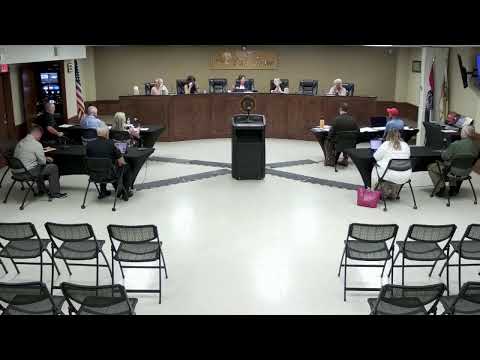
Oak Grove officials on Aug. 5 heard a two‑hour presentation on proposed changes to Chapter 500 of the city building codes and an accompanying overhaul of permit fees. Justin, a city staff presenter, said the ordinance to adopt the codes will be posted Aug. 19 to begin the state‑required 90‑day review and that the proposal bundles multiple model code updates and fee adjustments intended to “fund the department.”
The presentation covered plumbing, mechanical, fuel gas, electrical and private sewage codes and introduced a new permit structure tied to the International Code Council building valuation tables. Justin said the minimum permit fee would rise from $25 to $30, some commercial and residential permits would move to a $4 per $1,000 valuation basis with administrative minimums, and a new combined solar permit would replace separate building and electrical filings for PV projects.
A significant exchange focused on a plumbing/mechanical provision appearing to require an unusually large dryer‑exhaust passage/opening. Pam Pope moved to amend that item back to the existing code language after several members said the wording looked impractical for typical laundry layouts. Justin and staff agreed to research the specific code reference, confirm the intended language, and return with a recommendation either to delete or revise the clause so it does not mandate an unrealistic clearance.
Board members also debated reinstating a mid‑roof inspection for new construction to catch workmanship issues before final completion. Justin said the city had done mid‑roof checks previously but stopped enforcing them when contractors failed to schedule inspections; staff are pursuing an option to accept photos via the Citizenserve permitting portal as evidence in some cases to reduce inspection burden while preserving oversight.
Other proposed fee and practice changes include raising the erosion‑control deposit from $100 to $300 (with $50 taken for repeated failures), instituting a $100 temporary certificate of occupancy (TCO) fee for the 30‑day period, a $50 administrative fee for payment delays over 30 days, reinspection fees ($50 commercial after two fails), and higher plan‑review and final inspection fees for commercial projects. Justin said these changes aim to capture administrative cost recovery and help sustain inspections and code‑enforcement capacity.
Several board members asked staff to produce clear examples and written materials for builders and homeowners (for example, sample fee calculations for a 2,000‑square‑foot house) and to compare weekend construction and inspection practices in neighboring cities. Justin said staff will bring requested clarifications and potential ordinance edits at the next opportunities during the 90‑day review period, with a target to adopt the package by Jan. 1 if timing permits.
The board did not take a final vote on the ordinance package at the meeting; staff will return with clarified language and follow‑up recommendations.