Get Full Government Meeting Transcripts, Videos, & Alerts Forever!
Get email alerts on the Forestry Logical Controls topic
No spam. Unsubscribe anytime.
Senate committee weighs permit requirement for logging in gated communities after Diamond Head clearing
Summary
Supporters from Diamond Head described extensive tree removal, erosion and sedimentation into Lake Catherine and urged SB385, which would require permits and mandatory BMP compliance for large clearings in gated residential communities. Forestry groups opposed mandated rules, favoring voluntary BMPs; Senator Allen Clark withdrew the bill for revision.
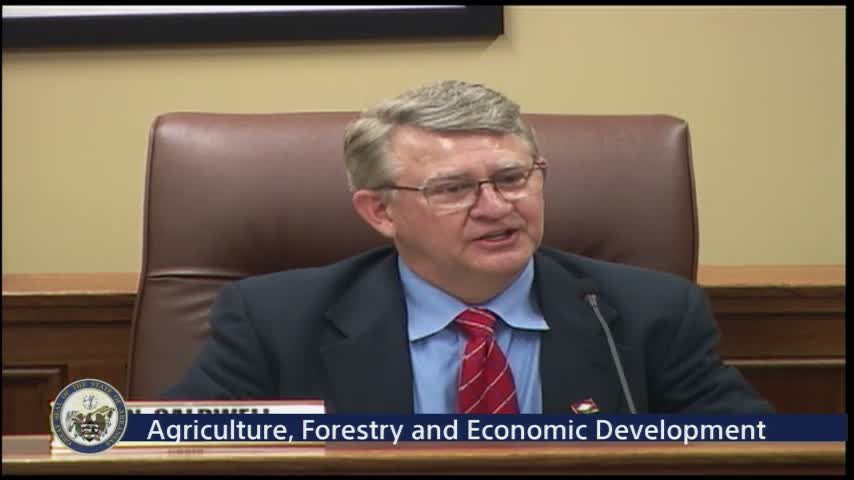
Senator Allen Clark introduced SB385 to the Agriculture, Forestry & Economic Development Committee, saying the bill targets large‑scale logging inside gated residential communities after reports of extensive clearing in Diamond Head. Clark said the measure would not affect ordinary timber operations and described thresholds he added to limit scope — a 3‑acre minimum and a 2,000‑foot proximity cap — while acknowledging the bill needs clearer definitions of 'gated community.'
Why it matters: Residents and local officials said the Diamond Head work left tree tops and debris in creeks, caused erosion and sedimentation into Lake Catherine, and created what several witnesses called a fire‑fuel risk near homes. "This is not an anti‑logging bill — it is only a managed logging bill," said Kendra Raisner, a Diamond Head resident, urging permits, closer monitoring and timely compliance to prevent further damage.
State forestry testimony: Joe Fox, state forester and director of the forestry division, told the committee Arkansas relies on voluntary best management practices (BMPs) for forestry and that a ~93% implementation rate was reported in a 2018 survey. Fox said, "This would be the first permit ever for anything like this in Arkansas," and described a longstanding MOU with the Arkansas Department of Environmental Quality (ADEQ) for inspections and enforcement authority under water‑quality rules.
Industry opposition: Max Braswell, executive vice president of the Arkansas Forestry Association, told the panel he knew "of no single AFA member who would support this bill," warning that mandatory BMPs risk unintended consequences and could infringe private property rights. Larry Balcaroso of the Arkansas Timber Producers Association echoed concerns about converting a successful voluntary program into a regulatory regime.
Local testimony: Diamond Head residents described the site as "disastrous destruction" and said inspectors had visited multiple times. Nora Cole, a resident, said the logging caused flooding and erosion near her property and argued that BMPs were not followed; she told the committee, "This bill will ensure BMPs are followed correctly and in a timely manner." Ben Sanders, another resident, urged lawmakers to visit the community to see the damage firsthand.
Next steps and outcome: After extended questioning and testimony, Senator Clark said he would withdraw SB385 to revise it and consult with stakeholders. The chair recorded the withdrawal 'without objection.' The committee did not vote on SB385; Clark said he intends to bring the measure back, amended or unamended.
Context and constraints: Committee members raised concerns about exceptions for utility vegetation management and beetle‑infestation removals; one member noted the bill included a $100 permit fee, and Clark said he was open to narrowing or expanding exemptions. Agency witnesses emphasized that ADEQ retains the authority to pursue enforcement when BMPs are not followed and that much forestry oversight in Arkansas operates on a voluntary, education‑and‑mitigation model.
What to watch: Clark will reintroduce SB385 after revisions and stakeholder talks. If refiled, the committee will need clearer definitions of 'gated community,' precise thresholds and enumerated exceptions for time‑sensitive utility or emergency work.