Get Full Government Meeting Transcripts, Videos, & Alerts Forever!
Get email alerts on the State Meat Inspection topic
No spam. Unsubscribe anytime.
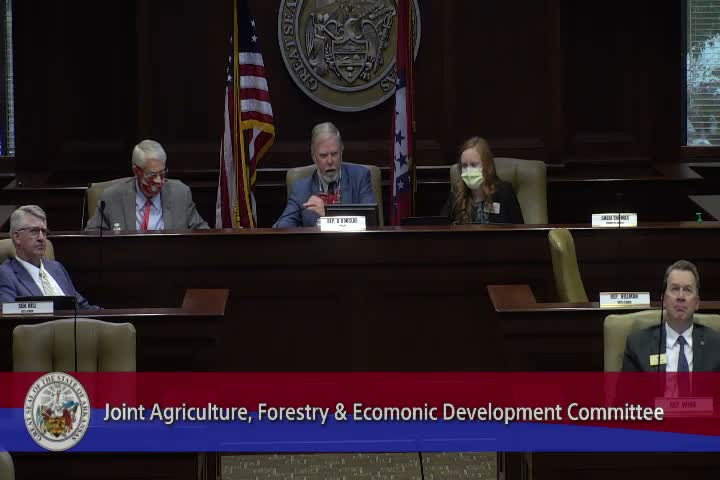
Arkansas Cattlemen urge state inspection options; warn of large backlog and processing limits
Summary
The Arkansas Cattlemen's Association told legislators the COVID-19 shock has renewed interest in state meat inspection and local processing to keep markets operating; the association cited an estimated 600,000 head backlog, noted costs for a state inspection program and recommended pilots and further study rather than an immediate statewide rollout.
The Arkansas Cattlemen's Association told the joint Agriculture Committee that COVID-19–related processing slowdowns have renewed producer interest in state meat inspection as a way to diversify market outlets and reduce supply-chain bottlenecks.
Cody Burkleman, executive vice president of the Arkansas Cattlemen's Association, reviewed mandatory country-of-origin labeling history, WTO disputes and why reinstating mandatory beef/pork labeling is legally and politically difficult. "Mandatory country of origin labeling started in essentially 02/2008..." Burkleman said, and he warned that WTO rulings subsequently constrained mandatory labeling on beef and pork.
On state inspection, Burkleman said Arkansas currently has only a few public facilities that allow resale and that producers are seeking options to meet local demand. He outlined three inspection types: state plants (state-run inspectors meeting equal-to-federal standards), custom plants (slaughter for private individuals only, product cannot be sold), and Talmadge-Aiken plants (state employees inspecting to USDA standards but funded by the state), and estimated operating costs for a state program could range from about $2 million to $10 million for smaller to larger states. He said FSIS may cost-share inspector wages at roughly 50 percent and suggested a pilot program with a small number of state inspectors as a possible near-term step.
Burkleman described the immediate producer pain. "As of last I heard, there were around 600,000 head of cattle that were still…needed to be moved through the processing facilities," he said, and warned that prolonged bottlenecks could force some small producers out of business. He also emphasized that state inspection is not a "silver bullet" and that rules would still require processes equal to federal standards.
Lawmakers discussed policy options. Several members urged staff to compile research and draft legislation if appropriate. Senator Hill offered to run a bill if producers and advocates supplied research and information.
The committee received the presentation and engaged in extended Q&A about costs, legal constraints and possible pilots; no formal vote or new rule was taken during the meeting.
Next steps: members asked industry and staff to prepare data and draft options for potential state inspection legislation or pilot programs.