Get Full Government Meeting Transcripts, Videos, & Alerts Forever!
Get email alerts on the Dicamba Enforcement topic
No spam. Unsubscribe anytime.
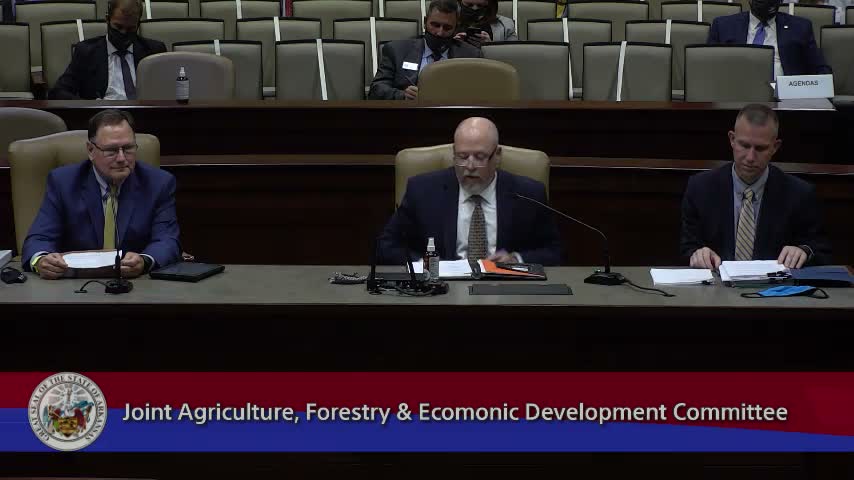
Committee hears spike in dicamba complaints and criticism of Plant Board enforcement; members request follow-up briefing
Summary
Plant Industry staff reported hundreds of pesticide complaints this year — more than 200 alleged dicamba cases — and dozens of settlement proposals. Farmers and stakeholders sharply debated Plant Board composition, transparency and the size of proposed penalties; the committee asked the secretary and Plant Board leadership to return with a detailed September update.
Scott Bray, director of the Plant Industry Division, told the committee that the department had received 472 pesticide‑related complaints as of mid‑August, with 211 alleged dicamba complaints among them. He said staff has issued 48 settlement proposals that together total roughly $1.5 million in initial offers, which the division sets at about 50% of potential maximum penalties according to board‑approved guidelines.
Bray described the enforcement process: staff investigation, an initial settlement proposal, an opportunity for an informal settlement discussion, and, if agreement is not reached, a formal board hearing. He said some settlements negotiated informally have been in the low thousands of dollars, and that one formal civil penalty issued earlier involved a non‑cooperating out‑of‑state producer and totaled about $104,000.
The public record drew sharp testimony from both sides. Terry Fuller, chairman of the Arkansas State Plant Board, defended the board nd its enforcement role, emphasizing the board—xists to "protect and serve" and citing previous task‑force work on dicamba rules. By contrast, Charles Williams and Perry Galloway — local farmers and stakeholders — urged legislative review, arguing the Plant Board s structured gives industry groups outsized rulemaking power and that some proposed fines are inequitable or excessive.
Members raised procedural and transparency concerns after media outlets obtained lists of alleged violators via public records requests. Representative Jett requested regular updates; the committee voted to ask Secretary Ward and state plant leadership to return in September with detailed case status, county breakdowns and outcomes in administrative and civil proceedings.
No new penalties were imposed during the hearing itself; the committee requested additional data and scheduled the follow‑up briefing.