Get Full Government Meeting Transcripts, Videos, & Alerts Forever!
Get email alerts on the Covid Ag Impact topic
No spam. Unsubscribe anytime.
UA experts tell Arkansas lawmakers COVID-19 disrupted processing, pushed down slaughter volumes and chick placements
Summary
University of Arkansas experts briefed the joint Agriculture Committee on COVID-19's effects: supply-chain disruptions, worker-safety challenges and large processing slowdowns that have driven a gap between farm and wholesale prices; speakers warned some effects could be long-term and outlined legal and assistance issues.
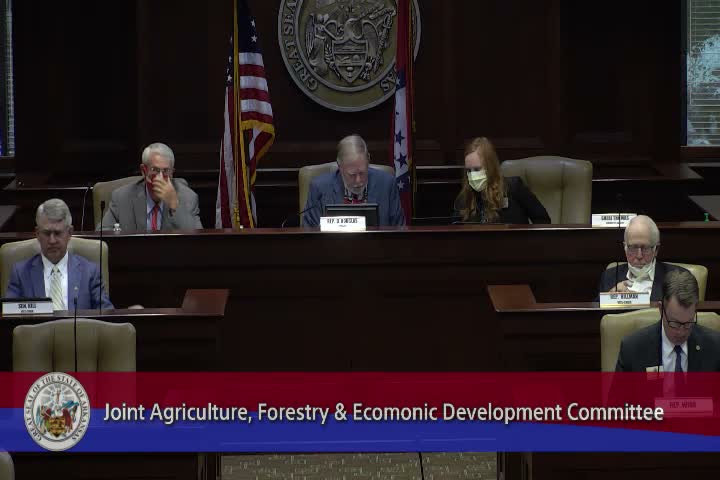
University of Arkansas researchers briefed the Joint House and Senate Agriculture, Forestry and Economic Development Committee on how the COVID-19 pandemic has affected Arkansas agriculture, citing major supply-chain disruptions and processing bottlenecks that have reduced slaughter and altered prices.
Mark Cochran, vice president of agriculture for the University of Arkansas system, said agriculture is diverse and significant to the state economy and outlined three pandemic impacts: disrupted supply chains as food service demand collapsed, worker-safety and labor availability problems, and a broader economic downturn reducing consumer incomes and demand.
Dr. John Anderson, head of the Department of Agricultural Economics and Agribusiness, described commodity-specific effects and processing capacity shortfalls. "We right now are running, almost 30% below last year's weekly average in terms of cattle and hog slaughter," Anderson said, and he warned that processing slowdowns have created a large upstream glut in live animals and could lead to long-run production changes because of current breeding decisions. He also reported chick placements were down about 10–15% compared with January–February levels.
Harrison Pittman, director of the National Agricultural Law Center, summarized legal issues producers face: contract disputes where buyers refuse scheduled deliveries, CARES Act and other relief programs (Paycheck Protection Program, EIDL) and eligibility questions, H-2A labor and housing concerns, and the April 28 executive order invoking the Defense Production Act to prioritize meat and poultry production and worker safety.
During Q&A, lawmakers asked why chick placements have lengthened and whether producers can sell directly to consumers via social media. Cochran and Anderson said placements fell as processors and supply chains adjusted to food-service demand and worker-safety protocols. Legal staff said live-animal sales to be processed under a custom-exempt facility are permitted, but processed meat sold to consumers generally must come from an FSIS-inspected facility because Arkansas does not currently operate a state inspection program.
Panelists directed lawmakers to UAEX resources (uaex.edu) for further data and analysis and said outreach and follow-up would be provided. The briefing emphasized both immediate disruptions and potential longer-term structural effects on production and processing capacity.
Next steps: lawmakers requested supporting data and said they would consider policy options and relief programs as the economic effects evolve.