Get Full Government Meeting Transcripts, Videos, & Alerts Forever!
Get email alerts on the Agriculture Environment Regulation topic
No spam. Unsubscribe anytime.
Senate committee approves bill moving liquid-animal-waste oversight from ADEQ to ANRC amid environmental concerns
Summary
The Senate Agriculture Committee voted to advance SB550, which transfers oversight of liquid livestock litter from the Arkansas Department of Environmental Quality to the Arkansas Natural Resources Commission. Supporters called the change an efficiency measure; opponents warned it weakens Reg 5 protections and could reduce public notice and technical safeguards.
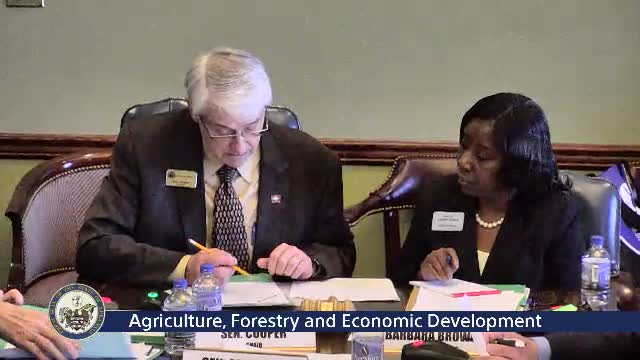
The Senate Agriculture, Forestry & Economic Development Committee voted to advance Senate Bill 550 as amended, moving oversight for certain liquid livestock litter activities from the Arkansas Department of Environmental Quality to the Arkansas Natural Resources Commission.
Sponsor Senator Stubblefield said the measure is intended to streamline permitting and reduce duplication for farmers who now must work with multiple agencies. "This has nothing to do with CNH," he told the committee, adding the change is about efficiency and simplifying where farmers go for a permit.
Supporters called the change practical for family farms. Farmer John Bailey told the committee the current system forces some operations to navigate two or three agencies and multiple plans, and said ANRC already works with the University of Arkansas on technical matters such as the phosphorus index. Dairy farmer Delia Hawk said her farm has been required to test soil and maintain five-year nutrient-management plans and that removing duplicative steps would help compliance.
"If a farmer has to go to two or three different agencies to even figure out what they need to do, then to me that's a problem," Bailey said.
Opponents said the bill removes critical Reg 5 safeguards that govern liquid-animal-waste systems and could eliminate meaningful public notice. Gordon Watkins testified the bill "would do away with that regulation entirely" and highlighted language that allows an applicant to "waive in writing notification period requirements," asking, "Does that mean that the applicant can choose to have no public notice?"
Scientific and environmental witnesses urged continued technical safeguards. David Peterson, a former university professor, warned that high-intensity operations cause phosphorus buildup and leaching that state nutrient plans have not controlled in the Illinois River watershed. Brian Thompson, a retired industry employee, said the Agricultural Waste Management Field Handbook (a USDA resource) provides geology- and site-specific protections that he fears would be lost.
ADEQ officials also expressed legal and administrative concerns. Mitch Rouse, ADEQ chief of staff, said ADEQ's mandate is water-quality protection and that certain aspects of the draft bill "may cause problems" with federal law, including the need for a clear appellate process and protections consistent with the Clean Water Act. ADEQ counsel advised the committee that the state currently administers Reg 5 permits in a way that EPA finds protective and warned that shifting authority without equivalent administrative processes could invite federal scrutiny.
The sponsor and some supporters disputed that federal oversight would change. Committee discussion included comments that the attorney general's office had reviewed proposed language and recommended including ADQ-ANRC cooperation provisions to preserve technical consultations.
After debate the committee adopted an amendment (substituting the department name with the commission in one provision) and then voted to report SB550 "do pass as amended." Chair called the ayes and recorded no opposition. The bill will proceed to the next legislative stage.
The committee hearing included extensive public testimony and technical discussion; ADEQ estimated roughly 215 Reg 5 permits could shift if the law is changed, and multiple witnesses urged careful drafting to preserve public notice, appeals and geology-specific safeguards.