Get Full Government Meeting Transcripts, Videos, & Alerts Forever!
Get email alerts on the Animal Chiropractic topic
No spam. Unsubscribe anytime.
Arkansas committee advances bill to let certified chiropractors treat animals without veterinarian physically present
Summary
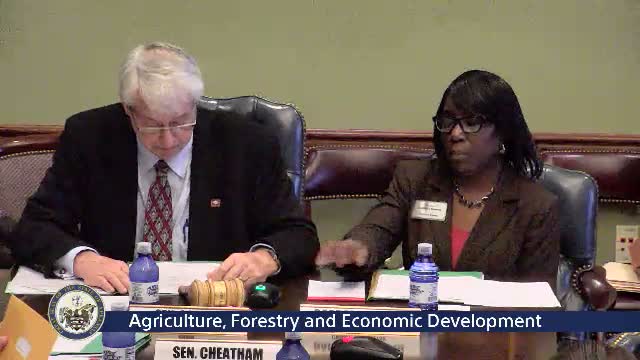
A Senate committee voted to report HB1264 'Do Pass' after proponents said certified animal chiropractors complete roughly 225 hours of training and that requiring a veterinarian to be on site creates scheduling barriers that delay care for animals.
Representative John Peyton (R-64) told the Senate Agriculture, Forestry and Economic Development Committee he brought HB1264 to remove a requirement in the veterinarian section of Arkansas law that animal chiropractors work "in immediate supervision" of a veterinarian. Peyton said the supervision language has been read to mean veterinarians must be within "3 feet or arm's length."
"I just propose that we strike that immediate, supervision part because that means within 3 feet or arms length," Peyton said, adding that chiropractors seeking to treat animals obtain roughly 225 hours of additional classroom and hands-on instruction and receive certification from the American Veterinary Chiropractic Association.
Dr. James Innes, a licensed chiropractor certified in animal chiropractic and an instructor at training schools, testified in support. He said he was certified in 1998 and estimated "roughly 15 to 20" chiropractors currently perform animal chiropractic in Arkansas. Innes described scheduling problems when a veterinarian is called away for emergency field work and said those interruptions force rescheduling of planned treatments. "We've had instances where on the way the office has called and said, you know, he had to be called out on an emergency...and so we've had to reschedule that," he said.
Senator Johnson asked if Innes had encountered an immediate medical danger in more than 20 years of practice; Innes replied, "No, sir," and said chiropractors refer to veterinarians when an animal shows conditions outside the chiropractor's scope. Peyton and witnesses emphasized that certified animal chiropractors work with veterinarians but said requiring a veterinarian to be physically present can prevent or delay care.
Dr. Sabrina Williams, a practicing human chiropractor from Beebe who is also certified in animal chiropractic, said she has documented cases where chiropractic care restored mobility for animals and described good working relationships with many veterinarians. "A lot of animals are not getting taken care of like they should," Williams said, arguing the on-site requirement can derail scheduled care when veterinarians are reassigned.
Committee members asked about the original rationale for the supervision requirement and the types of animals treated; witnesses said most cases are equine but also include dogs, cats and show livestock. After questions and testimony, the committee made a motion to report HB1264 "Do Pass," voted by voice and the chair announced the bill passed out of committee.
The bill will move to the next step in the legislative process; the committee record shows a voice vote with no recorded opposition. The transcript did not include a roll-call vote or numeric tally.