Get Full Government Meeting Transcripts, Videos, & Alerts Forever!
Get email alerts on the Voting Reform topic
No spam. Unsubscribe anytime.
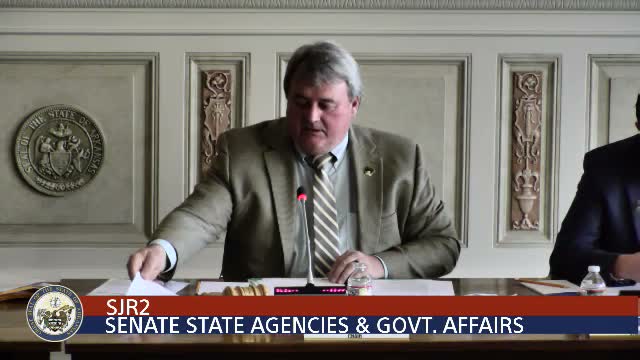
Senate committee hears proponents and questions on SJR 4 to create open top-two primaries
Summary
Senators debated SJR 4—s proposal for top-two primaries that would place all candidates on a single primary ballot and advance the top two to the general election; proponents said it boosts participation, opponents asked for empirical evidence and warned it may produce one-party general-election ballots in some districts.
Little Rock — The Senate State Agencies & Governmental Affairs Committee heard testimony on SJR 4, which would refer an open, top-two primary system (sometimes called a "jungle" primary) to voters.
Senator Clark Tucker (Senate District 14) said the proposal would place every candidate on one primary ballot and send the top two vote-getters to the November ballot regardless of party. "Everyone who's running for a particular office is on your ballot when you show up to vote on primary day," Tucker said, arguing the change allows all voters to participate and could make elected officials accountable to the whole district, not only primary voters.
Josh Silverstein, testifying in his individual capacity, said open primaries can increase participation and allow crossover voting. He cautioned that the evidence is mixed and still developing: "The evidence isn't that strong that it has decreased partisanship" but said California shows some slow movement on intra-party dynamics.
Senators pressed for data. Senator Peyton asked for research on whether top-two primaries produce less partisan or more productive government; Tucker and Silverstein cited examples (California, Washington, Louisiana) but acknowledged the difficulty of isolating causal effects and that outcomes vary by state.
Opponents warned that in some heavily one-party districts the general election could feature two candidates from the same party, leaving other voters without a November choice from a different party. Tucker responded supporters still believe the change would better reflect voter preferences and empower independents.
The committee did not vote on SJR 4. Sponsors said they support the measure alongside independent redistricting reforms and will continue to provide evidence to members.