Get Full Government Meeting Transcripts, Videos, & Alerts Forever!
Get email alerts on the Vaccine Mandates topic
No spam. Unsubscribe anytime.
Nursing students, hospitals and the National Guard press lawmakers over vaccine rules and potential fallout
Summary
Witnesses told the committee that clinical site vaccine requirements and federal directives for military personnel are disrupting nursing education and raising personnel and unemployment questions; UAMS and the Arkansas National Guard outlined their policies and legal constraints.
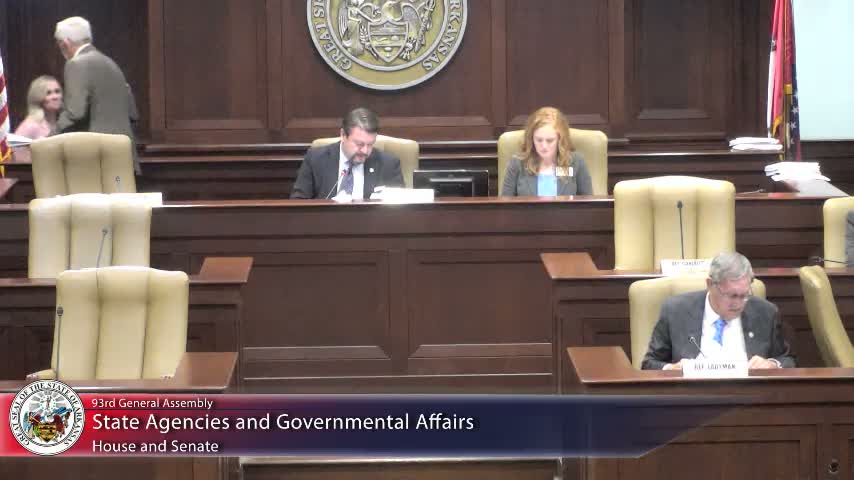
Little Rock — After hours of redistricting debate, members of the State Agencies & Govt'l Affairs Senate turned to a different, urgent topic: who can require COVID‑19 vaccination and what happens to students and workers who refuse.
A father testified he had been forced to consider having his daughter withdraw from the nursing program at the University of Central Arkansas because outside clinical sites required vaccines and UCA would not disclose the list of required sites or seek exemptions on students’ behalf. "She will have to withdraw from college due to this mandate," Chad Bond told the committee, describing his daughter’s high grades and concern that clinical placements were being withheld.
University of Arkansas for Medical Sciences (UAMS) staff told the committee UAMS does not have a system-wide COVID vaccine mandate and that roughly 78% of College of Nursing students are vaccinated. Michael Keck said the university encourages vaccination, makes medical and immunization experts available to students, and tries to find alternate clinical placements when outside facilities require additional vaccines. He also warned that some external partner facilities give priority to their own students and capacity to accept outside students is limited.
"We do not have a COVID vaccine mandate at UAMS," Keck said, adding the system will work with students and facilities where possible.
Committee members then heard testimony from Major General Kendall Penn, the Adjutant General, and other Arkansas National Guard leaders about federal military vaccination directives. Penn explained the legal distinction between state employees (who are covered by state law) and Guardsmen who serve in federal status and said Department of Defense directives require vaccination of service members; implementation timelines differ by component. He described a multi-step process of counseling, medical and legal reviews for exemption requests, and said administrative separation is a possible outcome if exemption requests are denied after full process and the service member declines vaccination.
Members pressed on the likely personnel impact and on whether discharges would deprive service members of benefits. Guard counsel said any adverse event tied to an ordered vaccination can be treated as a line-of-duty event with associated benefits, and that separation boards consider the totality of a service member’s record before any negative characterization is applied.
Lawmakers also asked how employment and unemployment rules apply when private employers (including hospitals) impose vaccine mandates. Department of Workforce Services officials said unemployment claims are adjudicated case-by-case: claimants may assert religious or medical exemptions and the agency will evaluate the employer’s policy, the claimant’s stated reason for separation and relevant case law. In general, officials said, a claimant who resigns or is terminated for refusing to comply with a mandate must show a qualifying religious or medical reason to be eligible for unemployment benefits.
Members urged state agencies and major universities to collaborate and seek pragmatic accommodations to avoid disrupting students’ education and to protect health-care workforce capacity should more mandates be enforced. Committee leaders invited UAMS and other institutions to follow up with members this week.
What’s next: Committee did not enact any new rules. Members asked agencies to report back with details about clinical partners, capacity to accept unvaccinated students for rotations and potential workforce impacts if mass separations occur.