Get Full Government Meeting Transcripts, Videos, & Alerts Forever!
Get email alerts on the Veteran Tax Exemptions topic
No spam. Unsubscribe anytime.
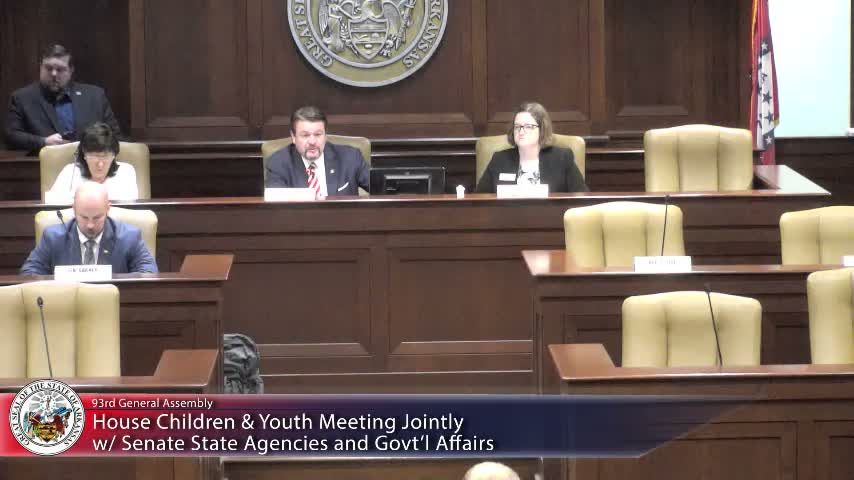
Veterans, county collectors and ADVA discuss confusion over 'permanent and total' property-tax exemption and possible statutory fixes
Summary
Veterans and county tax collectors told lawmakers that the current practice — where collectors require an annual VA "summary of benefits" letter to certify 100% permanent-and-total disabled status — creates confusion and administrative burden; ADVA and DFA officials discussed options and warned of fraud risks if documentation were reduced to a one-time submission.
Veterans, county collectors and Arkansas Department of Veterans Affairs staff told the State Agencies committee that securing the 100% property-tax exemption for permanently and totally disabled veterans is frequently confusing and administratively burdensome.
Veterans and advocates said the exemption is earned but that the federal VA process and COVID-related closures created delays and inconsistent local practice. Michael Brooks, founder of a veterans nonprofit, described a months-long exchange with a county office when pandemic-related closures complicated receipt of required paperwork. Harry Compreid, newly elected state commander of Disabled American Veterans, and other advocates urged simplifying documentation so that a veteran's permanent status would not have to be re-proved annually unless the veteran's condition changes.
County officials explained current practice: collectors rely on the VA-issued "summary of benefits" letter provided annually in January, view that one-page document as the cleanest evidence, and accept it to apply an exemption (which exempts payment, not assessment). Collectors and ADVA staff said the rationale for annual documentation includes the need to protect against fraud and to manage surviving-spouse and minor-dependent eligibility. DFA officials outlined related vehicle and income-tax exemptions and noted that neighboring states vary in whether they require one-time or annual proof.
There was no immediate legislative action; members asked stakeholders to work together to draft clearer statutory language that protects the benefit while addressing fraud and administrative burdens.