Get Full Government Meeting Transcripts, Videos, & Alerts Forever!
Get email alerts on the Election Technology topic
No spam. Unsubscribe anytime.
Rep. Meeks outlines biometrics and ballot‑ID proposals as part of a study on election technology
Summary
Representative Stephen Meeks proposed a voluntary, phased study of election technology that would test biometric voter verification and printing a rotating unique ballot ID (with public ballot lookup) to boost transparency and reduce absentee ballots; committee set a reporting deadline of Nov. 30, 2022.
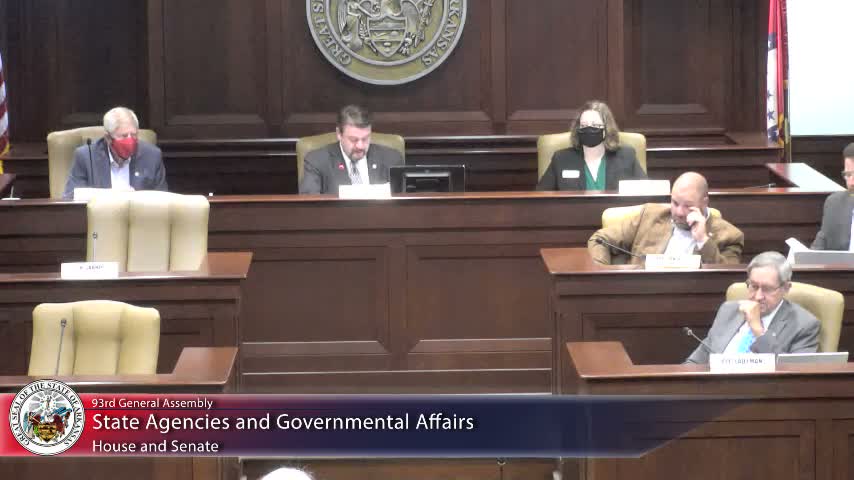
Representative Stephen Meeks told the Senate State Agencies & Governmental Affairs Committee that he intends to lead a multi‑meeting study to explore technology options for improving election integrity, transparency and access.
Meeks proposed two principal measures: using biometric verification (for example, a fingerprint scan) at polling sites to identify voters and fetch a current address from a longitudinal database so the correct ballot is generated on the spot; and printing a rotating unique ballot identification number on each paper ballot that citizens could enter on a public website after the election to confirm their ballot was recorded.
"Once that verification has been made, the system will then go out to a longitudinal database, grab my current correct address," Meeks said, describing how a fingerprint scanner could populate a ballot on the fly. He said the system would reduce the need for hundreds of county‑specific ballot styles and, in his view, eliminate many opportunities for error.
On transparency, Meeks said a ballot‑ID number that changes every cycle would let a voter check that their ballot was received and counted. "I can type in my ballot ID, and it will pull it up," he said, adding that candidates or their agents could audit images for every ballot in a race.
Meeks acknowledged multiple open questions: he said no state is known to use biometrics for in‑person voting and that security, cost, data‑access and privacy guardrails would need careful study. He proposed inviting the secretary of state, GIS staff, biometrics experts and vendors to future meetings and running pilot projects in two or three counties.
Committee members pressed Meeks on hacking risks, whether biometrics would be a primary or backup method, cost estimates and how voter registration would integrate with a biometric/address system. Meeks said costs were not yet known and that any rollout should be voluntary and phased so the committee can assess uptake and system resilience.
Chairmen reminded the committee the study requires a report to the Legislative Council by Nov. 30, 2022. No legislative votes on biometric or ballot‑ID measures were taken at the meeting.