Get Full Government Meeting Transcripts, Videos, & Alerts Forever!
Get email alerts on the Sovereign Immunity topic
No spam. Unsubscribe anytime.
Law professor urges elimination of sovereign immunity during Senate committee hearing
Summary
Josh Silverstein, a law professor, told the committee SJR 3 would remove sovereign immunity and allow citizens to sue the state in state court, arguing this change strengthens accountability and due process; members raised procedural questions about how lawsuits against the state would be handled.
The committee heard testimony on SJR 3, a proposed constitutional amendment to eliminate sovereign immunity for the state and its instrumentalities.
Josh Silverstein, a law professor who said he was speaking in his individual capacity, told the committee SJR 3 would allow any person to sue the state in state court ‘‘in the same circumstances as any other type of defendant, such as a natural person or a corporation.’’ He argued sovereign immunity is a vestige of monarchy that is inconsistent with modern notions of due process and the rule of law and said litigation is a primary tool for enforcing legal rights and holding government accountable.
Silverstein acknowledged two common objections: that litigation would increase and that taxpayers would bear financial responsibility for government wrongdoing. He said both are appropriate tradeoffs because litigation enforces rights and creates incentives for voters and officials to correct government misconduct. He also said the amendment would not eliminate immunities for individuals acting on behalf of the state and that the General Assembly could still enact process rules for suits against the state.
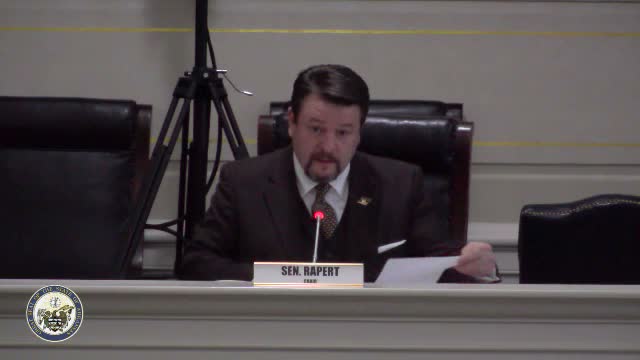
Members asked procedural and policy questions about the proposal, noting a separate provision in the draft that would allow the General Assembly to enact laws governing the process for bringing suits against the state. Senator Garner observed that the clause allowing the General Assembly to set process could be paradoxical if tort reform advocates seek different rules for ordinary defendants.
The committee did not reach a final decision on SJR 3 and scheduled further consideration; Silverstein was invited to return for additional questioning at a later hearing.