Get Full Government Meeting Transcripts, Videos, & Alerts Forever!
Get email alerts on the Public Health topic
No spam. Unsubscribe anytime.
Arkansas Department of Health briefs committee on rising cases, contact tracing and testing needs
Summary
State epidemiologist updated the committee on COVID-19 case counts, hospitalizations and contact-tracing procedures, urging expanded testing and tracing capacity before broad reopening; legislators pressed for testing metrics and school guidance.
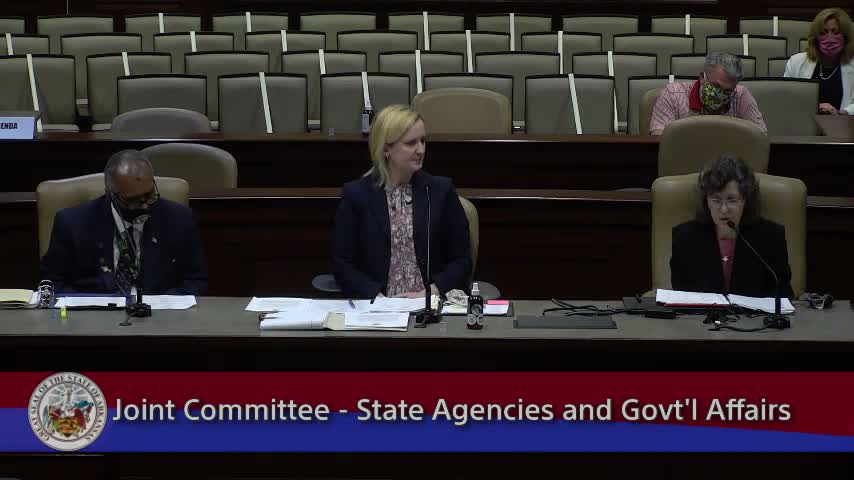
The Arkansas Department of Health told the State Agencies committee on May 19 that testing and contact tracing — not simply relaxed restrictions — must be in place before the state can safely move to broader reopening.
Dr. Jennifer Dillehay, the state epidemiologist, gave the committee updated totals and trends and described how the department conducts contact tracing: case interviews by trained nurses, identification of close contacts (within six feet for 15 minutes or more), enrollment in an active-monitoring system (Sara Alert) and follow-up testing when symptoms develop. She said the department monitors hospitalizations and ventilator use to avoid overwhelming health systems; at the time of the presentation DOH reported roughly 5,003–5,458 total confirmed cases (the higher number reflected an afternoon update), approximately 80 people hospitalized at once and 16 on ventilators, and about 107 deaths overall.
Dr. Dillehay stressed two prerequisites for wider reopening: widely available PCR testing and robust contact-tracing capacity. "If we can screen groups of people who are at increased risk — work sites, schools, nursing homes — then we can find cases earlier and stop transmission," she said. She acknowledged some antibody tests are unreliable for individual diagnosis and said immunity duration remains uncertain.
Lawmakers pressed the department on measures to increase testing throughput, whether the department is tracking percent-positive rates as a reopening metric, and how nursing homes and congregate settings are being prioritized for testing and outbreak control. Several members noted the majority of new cases came from congregate living and correctional facilities and urged the department to focus resources there. The department said it is coordinating with employers and the Arkansas Healthcare Association to test and contain workplace and nursing-home clusters.
Why it matters: The department framed testing and contact tracing as the tools needed to open the economy more fully while protecting vulnerable populations; the committee requested more specific testing-capacity figures and plans for screening high-risk congregate settings.
What happens next: DOH staff agreed to supply more detailed hospitalization and congregate-setting breakdowns and to work with the Department of Education on school-reopening guidance.