Get Full Government Meeting Transcripts, Videos, & Alerts Forever!
Get email alerts on the Veteran Suicide Policy topic
No spam. Unsubscribe anytime.
Senate staff outlines bill to expand community grants aimed at preventing veteran suicide
Summary
Sen. Boozman’s legislative assistant told an Arkansas Senate committee that the IMPROVES Act (S.1906), incorporated into S.785 (Commander John Scott Hannan Veterans Mental Health Improvement Act), would let the VA fund community organizations to reach veterans not engaged with VA care and improve data-sharing to identify effective programs.
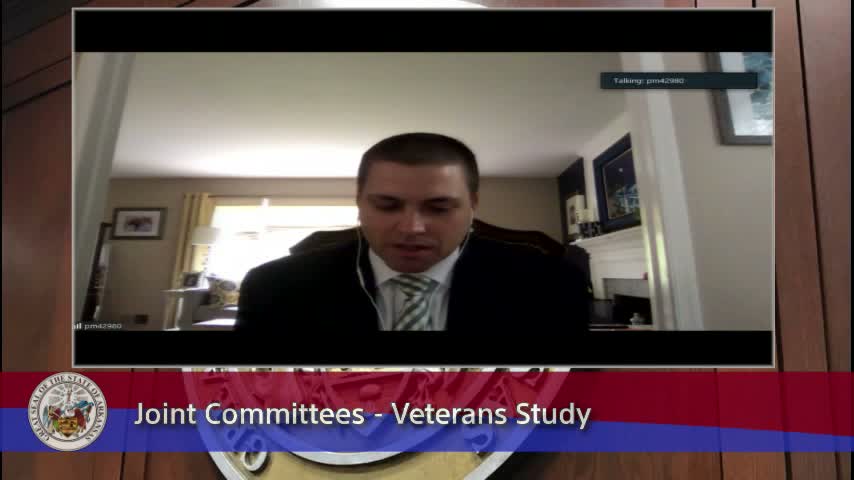
Patrick McGuigan, military and veterans legislative assistant for U.S. Sen. John Boozman, read a prepared statement to the State Agencies & Governmental Affairs Committee outlining federal legislation intended to expand community-based suicide-prevention efforts for veterans.
McGuigan said the bill referred to in his statement as the "IMPROVES Act" (Senate Bill 1906) takes "a revolutionary approach" by authorizing the Department of Veterans Affairs to create a grant structure allowing community veteran organizations to expand outreach and provide wraparound mental-health resources. He said that approach was incorporated into Senate Bill 785, which his statement identified as the Commander John Scott Hannan Veterans Mental Health Improvement Act, and that the Senate approved the package by unanimous consent.
"This bill empowers communities at the state and local level to combine their veteran engagement efforts with targeted suicide prevention programs," McGuigan said in the statement. He framed the grant model as a way to reach veterans who have not recently engaged with the VA: "Of those 20 veterans nationally, we learned that 14 had not been in communication or seen a VA provider in over 12 months. By authorizing the VA to provide funding through grants to community veteran organizations and local agencies, we can begin to target those 14 veterans a day through greater outreach."
McGuigan cited national and state figures in the statement, saying VHA mental-health spending has risen substantially over the past decade even as the average number of veteran suicides per day remained, in his words, "unchanged." He also highlighted a local example: the statement credited a community program in Baxter County, backed by DAV chapter 30 and a Columbia Trust grant, with a reported 25% reduction in veteran suicides after enhanced volunteer outreach.
The statement also called attention to women veterans, noting they are a growing share of the veteran population and that, according to the statement, the suicide rate among women veterans in 2017 was about 2.2 times that of non‑veteran women. McGuigan’s remarks referenced a separate measure described in the statement as the "Deborah SAMHSA Act" passed recently by the Senate Veterans Affairs Committee to begin addressing women‑specific issues.
Committee members asked logistical follow-up questions and were directed to staff contacts for more details and formal questions. McGuigan emphasized that, because of Senate ethics rules, staff would take detailed technical or policy questions through official channels and provide written responses.
What happens next: McGuigan said the Senator is prioritizing getting the initiative signed into law and that staff will work with local leaders to ensure communities can access and deploy grant funding if the legislation becomes law.
Ending: The committee thanked McGuigan for the statement and moved to presentations from VA suicide‑prevention staff.