Get Full Government Meeting Transcripts, Videos, & Alerts Forever!
Get email alerts on the Dhs Payments topic
No spam. Unsubscribe anytime.
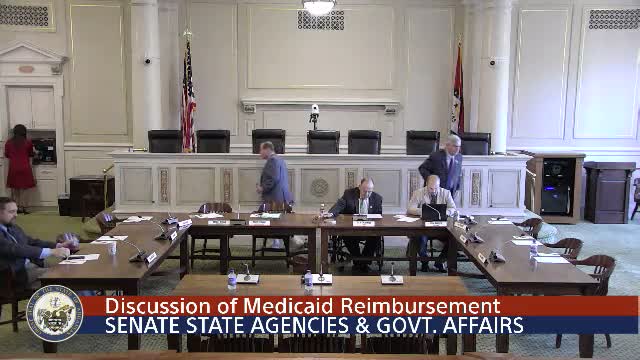
Senate panel hears providers say DHS transition left them unpaid; agency pledges fixes and off-cycle payments
Summary
Providers told the Senate State Agencies & Governmental Affairs Committee that a March 1 transition to managed-care “passes,” delayed provider enrollment and billing-system errors have left many providers unpaid, causing layoffs and near-bankruptcy; DHS acknowledged the problems and pledged technical help, an off-cycle run and a follow-up hearing.
Little Rock — Providers from behavioral-health and substance-abuse programs told the Senate State Agencies & Governmental Affairs Committee that months-long delays in getting paid by the Department of Human Services have left some clinics insolvent and forced layoffs and closures.
Cindy Gillespie, director of the Department of Human Services, acknowledged “operational issues associated with payment,” said DHS staff are on-site to provide technical assistance, and pledged an off‑cycle run so an affected provider can receive payment this week. “We sincerely… apologize for the issues they’ve had,” Gillespie said.
Why it matters: Providers said the March 1 switch to three managed-care “passes” and the accompanying IT and coding handoffs left billing systems untested, caused rates and codes to be transmitted incorrectly and delayed provider enrollment. That, they said, prevented clean claims from flowing through clearinghouses and left organizations with unpaid claims, payroll shortfalls and, in some cases, closed clinics.
Provider testimony: Joel Landreno, executive director of the Behavioral Health Providers Association and counsel for the Substance Abuse Providers Association, said “there are facilities that are contemplating bankruptcy” and urged prospective payments with later reconciliation to cover immediate payroll needs. Sheree Bazell, CEO of New Beginnings Behavioral Health Services, said enrollment delays with vendor DXC kept therapists from getting provider numbers for 30–45 days and left her organization paying staff without reimbursement. Stephanie Smith, chief operating officer for Easterseals, said the organization had about $1.1 million in claims unpaid from March 1 through the prior Friday.
DHS response and fixes: Don Staley, DHS deputy director and Medicaid director, and other DHS staff described longstanding provider-support contracts (DXC and AFMC), a provider-relations team and a command center staffed around the clock during the transition. Staley said enrollment backlogs and a mix of software, intermediary-payer and provider-system problems mean there is no single solution but that DHS has begun management changes and is working with passes to resolve outstanding claims. Paula Stone, deputy director of the division of medical services, said each pass must maintain reserve funding and that contracts include penalties and security provisions meant to ensure providers are paid.
Scope and numbers: Providers gave multiple examples of unpaid amounts, including a reported $1.1 million for one large provider and descriptions of sporadic checks and direct deposits totaling small partial payments (Easterseals reported receiving a $784 payment from one pass as an example of sporadic funds). Providers also said some claims dating back to September 2018 remained unresolved and that acquisition timing prevented back‑billing for certain sites and services.
Legislative follow-up: Senators pressed DHS for firm deadlines. Gillespie said DHS would work with providers to confirm what is “properly owed” before issuing payments and that the department would provide technical assistance to speed billing; she said DHS was bringing staff and would run targeted off‑cycle payments. The committee scheduled a joint meeting with the House State Agencies Committee for April 24 at 9:00 a.m. and invited DHS, all three pass administrators and the insurance commissioner to respond and provide documentation of reserves and contracts.
What was not decided: No formal motions or votes were taken. DHS did not guarantee a timeline to pay all providers; instead it promised to prioritize technical assistance, to make at least one full payment to an identified provider this week and to return to the committee with figures and the passes for a longer hearing.
The committee adjourned and will reconvene April 24 for a three‑hour joint session to review provider arrears, pass administration and the status of remediation efforts.