Get Full Government Meeting Transcripts, Videos, & Alerts Forever!
Get email alerts on the Campaign Finance topic
No spam. Unsubscribe anytime.
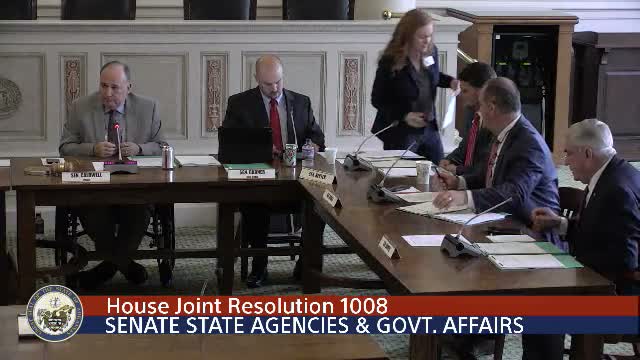
Senate Committee Debates Reporting Changes for Independent-expenditure Committees; House Bill 1893 Fails on Roll Call
Summary
House Bill 1893, which would align independent-expenditure committee reporting with candidate schedules and explicitly list contributor details in reports, was discussed at committee; supporters said the change increases transparency while critics warned of chilling effects, and a subsequent roll-call vote failed.
The Senate State Agencies & Gov't Affairs committee considered House Bill 1893, which would change reporting requirements for independent-expenditure committees (IECs) so that reporting is triggered on the same schedule and at the same thresholds as candidate reporting.
Representative Dela Rosa introduced the measure and said the bill does not create new IECs but instead requires IECs that already fall under existing law to report information on the same schedule as candidates and to list contributor details that the candidate reports require. The sponsor said the change is intended to make advocacy spending and sources more transparent to voters before an election.
Graham Sloan, director of the Arkansas Ethics Commission, told the committee that existing law requires groups that expressly advocate the election or defeat of a clearly identified candidate to register and report the same information as candidates; HB 1893 pulls the candidate-reporting list explicitly into the IEC statute and adds a clarification requiring committees to indicate whether an ad was ‘for’ or ‘against’ a candidate.
Opponents and some committee members raised constitutional and practical concerns. Several senators cautioned that extending reporting obligations and the candidate-style disclosures could chill grassroots activity and potentially trigger legal challenges under free-speech precedents such as Citizens United. Other members said the change simply clarifies existing requirements and ensures IECs report useful details earlier in the election cycle.
A committee member moved that HB 1893 'do pass' and discussion continued. When the committee recessed to the scheduled roll-call, recorded responses in the transcript show Senators Vaughn and Davis voting 'Aye' while Senators Hester, Ballinger and Gardner were recorded as 'No.' The chair announced, “The bill does not pass,” and the committee adjourned.
The transcript excerpts include technical questions about which contributor details would be reported and whether the bill changes contribution thresholds; the Ethics Commission director said the bill largely incorporates existing candidate-reporting elements into the IEC reporting statute while adding one explicit reporting item (whether an expenditure was for or against a candidate). The transcript contains no final signed bill text or fuller roll-call record; the committee announced the negative result and adjourned.