Get Full Government Meeting Transcripts, Videos, & Alerts Forever!
Get email alerts on the Public Employment Speech topic
No spam. Unsubscribe anytime.
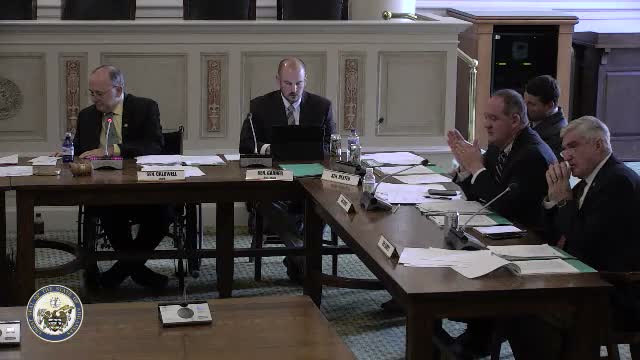
Committee discussion exposes deep divisions over bill to expand public employees' off-duty speech rights; sponsor pulls measure for revision
Summary
Lawyers and university officials warned that proposed legislation expanding public employees' off-duty speech protections would upend established First Amendment doctrine and risk litigation; after extensive hearing the sponsor said the bill would be pulled for further work.
A large, contested hearing focused on a bill (SB 236) that would codify and broaden protections for public employees’ off-duty speech.
Professor Robert Steinbeck, presenting the legal rationale, said the bill would clarify that government employees do not lose First Amendment rights simply because they are employed. “If you're off, then you have the freedom to engage in speech like any other citizen would,” he said. But University of Arkansas attorney David Curran warned the measure would "represent an extreme expansion" of employee free-speech protections beyond current US Supreme Court doctrine and could produce an "avalanche of lawsuits" and workplace disruption if adopted in its present form.
Municipal and university representatives raised practical concerns: whether employers could discipline employees for egregious off-duty conduct; how high‑ranking employees whose speech damages public trust would be treated; and whether the bill's draft would remove customary time/place/manner or job‑related restrictions. Committee members probed the boundaries of the proposal and asked for examples and limits.
After extended back-and-forth, the sponsoring senator said there was room to tighten and constrict the bill and recommended pulling the measure so it could be reworked; the sponsor and several members agreed to that approach rather than move forward immediately.