Get Full Government Meeting Transcripts, Videos, & Alerts Forever!
Get email alerts on the Monument Protection topic
No spam. Unsubscribe anytime.
Monument protection bill sparks debate over scope and penalties; sponsor to revise language
Summary
SB 515 would broadly define monuments on public property and impose criminal penalties for relocation or damage. Lawmakers raised concerns that the bill's definitions are too broad (including streets, schools and small markers) and that class D felony penalties could criminalize minor acts; the sponsor agreed to pull the bill and draft clarifications.
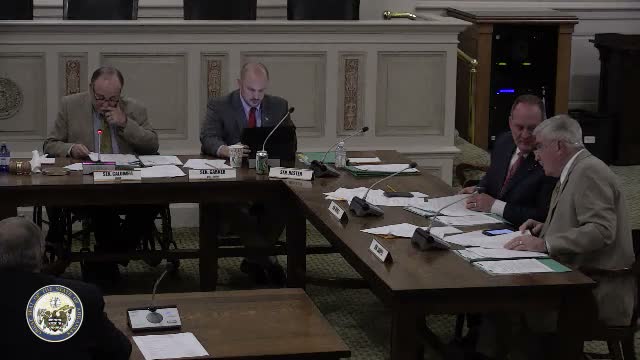
Senator Mark Johnson introduced SB 515, a measure that would define "monument" expansively and prohibit relocation, renaming or damage to monuments on public property. The bill drew immediate, extended questioning about its scope and penalties.
The proposed definition includes statues, memorials, plaques, flag displays, schools, streets, bridges and facilities on public property and references listings on the National Register of Historic Places. Committee members and the public cautioned that the current drafting could sweep in ordinary street names and school signage and turn relatively minor acts — such as removal of a sign or an act of vandalism by a teenager — into a class D felony.
Senator Garner and others pressed for a narrower approach, suggesting a tiered penalty structure or clearer threshold for intent and seriousness. The sponsor agreed to work with committee members to tighten definitions — especially concerning streets, private property and school facilities — and to return with targeted amendments. The senator indicated he would pull the bill and refile it after revisions so the committee could consider redrafted language at a future meeting.
Committee members asked staff and the sponsor to explore existing vandalism statutes and a two‑tiered approach (lesser penalties for inadvertent or minor damage; stronger penalties for malicious or organized acts) to avoid unintended consequences for young people or for routine maintenance actions.