Get Full Government Meeting Transcripts, Videos, & Alerts Forever!
Get email alerts on the Elections Access topic
No spam. Unsubscribe anytime.
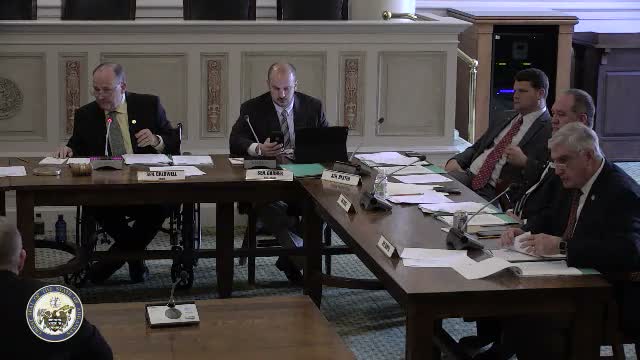
Senate committee backs doubling voting‑booth time to 10 minutes despite county and equipment concerns
Summary
After extensive testimony from election officials and commissioners, the committee passed a bill to extend voting‑booth time from five to ten minutes; supporters cited longer ballots and voter complexity, while commissioners warned of longer lines and equipment costs.
The committee debated House Bill 15-03, which would increase the statutory time voters may spend in a voting booth from five minutes to ten minutes.
Supporters said the change would give voters extra time to consider lengthy ballots and constitutional amendments. "We can come back in two years and address [any problems]," one sponsor said, urging a supportive vote. Proponents said election commissioners from some regions "want this desperately" to help older voters and those needing more time.
Opponents, including Jefferson County Election Commissioner Stuart Soffer, cautioned that a fixed 10‑minute cap could reduce electronic ballot-marker throughput and create much longer lines. Soffer told the committee that current electronic ballot-marking machines serve roughly 12 people an hour under a five‑minute assumption and that doubling the cap could force agencies to buy additional equipment at substantial cost. "If you increase it to 10 minutes and people take the entire 10 minutes then they only serve 6 people an hour...you're gonna have long lines necessitating more ballot markers with a $2–3 million price tag for the state," he testified.
Members raised legal questions about changing a codified five‑minute rule and whether local election commissioners' current informal practice of allowing extra time exposes ballots to legal challenge. Proponents suggested training and voter education as mitigation; opponents suggested giving discretion to local election authorities instead of a fixed statutory increase.
After extended questioning and public testimony, the committee approved the bill by voice vote. Sponsors acknowledged follow-up work to assess equipment needs and possible amendments if implementation proves problematic.