Get Full Government Meeting Transcripts, Videos, & Alerts Forever!
Get email alerts on the Corrections Womens Dignity topic
No spam. Unsubscribe anytime.
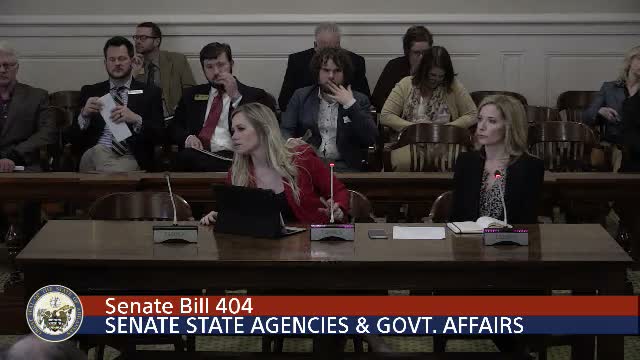
Senate committee passes women—s dignity bill after expunging amendment vote
Summary
The committee voted to pass House Bill 1523, a measure to strengthen protections for incarcerated women (banning shackling during childbirth, ensuring feminine-hygiene access). Members debated an amendment referencing Amendment 33 and later expunged that amendment vote before approving the bill as amended.
The Senate State Agencies & Governmental Affairs Committee on Tuesday passed House Bill 1523, aimed at strengthening protections for incarcerated women in state custody.
Sponsors and advocates described the measure as a "women dignity" bill modeled on legislation in other states; provisions highlighted include prohibiting shackling of pregnant inmates during childbirth and ensuring access to feminine-hygiene products. Theresa Crossland of the Justice Action Network told the committee the Department of Corrections helped shape the language and the governor's office supported the bill.
Committee debate focused on a technical amendment the Department of Corrections requested to clarify the Department—s powers under Amendment 33 (a state constitutional provision referenced repeatedly in the hearing). Several members raised concerns that inserting an explicit reference to Amendment 33 in statute could be interpreted as ceding legislative oversight; Senator Garner moved to expunge the amendment vote, and the motion to expunge carried.
After further drafting adjustments (including changing a policy requirement from "shall" to "may" in one line to preserve legislative oversight), the committee voted to pass HB1523 as amended. Members said they would work with BLR and the Department of Corrections to refine any remaining language before the bill moves to the Senate floor.
"All this does is simply clarify... that restriction does not prevent the Board of Corrections from implementing policies that implement this language," one sponsor said, while other members said they would watch the insertion of constitutional language carefully in future bills.