Get Full Government Meeting Transcripts, Videos, & Alerts Forever!
Get email alerts on the Electioneering Definition topic
No spam. Unsubscribe anytime.
Senate committee approves bill to define electioneering, citing Supreme Court guidance
Summary
Legislation to define "electioneering" (display/audible advocacy near polling places) moved out of committee after sponsors said it codifies existing prohibitions and State Board guidance; officials cited a recent U.S. Supreme Court decision when framing the definition and enforcement.
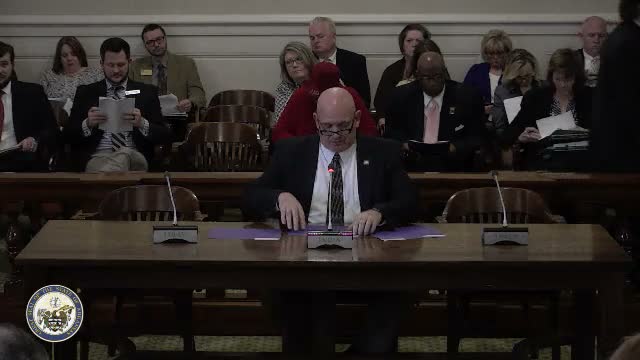
The Senate State Agencies & Governmental Affairs Committee advanced House Bill 1504 on Tuesday, a measure that would create a statutory definition of "electioneering" at polling places.
Sponsor Senator Pitch said the change responds to disputes about what activity counts as electioneering — for example, distribution of literature or wearing advocacy items in a voting line. The bill separates employee conduct (section A) from "persons" (section B) and uses a 100-foot buffer in practice to determine where displays or audible advocacy are prohibited.
"This is an agreed upon bill between the county and the election commission," Pitch said, adding it is intended to provide clarity for poll workers and voters.
Daniel Schultz, director of the State Board of Election Commissioners, told the panel that electioneering already is prohibited under Arkansas law but the bill clarifies the definition to follow U.S. Supreme Court guidance (a Minnesota case discussed in committee). Schultz said violations are a class A misdemeanor but that poll workers commonly allow voters to turn shirts inside out or cover them so voters can cast ballots.
Committee members pressed on edge cases: whether a blimp tethered a block away or an airplane banner would be treated as electioneering, and whether slogans closely associated with a candidate but not bearing a name could be banned. Sponsors said the intent is to forbid targeted advocacy within the buffer but not to sweep overly broad symbols that are not tied to a candidate or measure on the ballot.
After questioning and brief public comment, the committee voted to pass the bill.