Get Full Government Meeting Transcripts, Videos, & Alerts Forever!
Get email alerts on the Public Finance topic
No spam. Unsubscribe anytime.
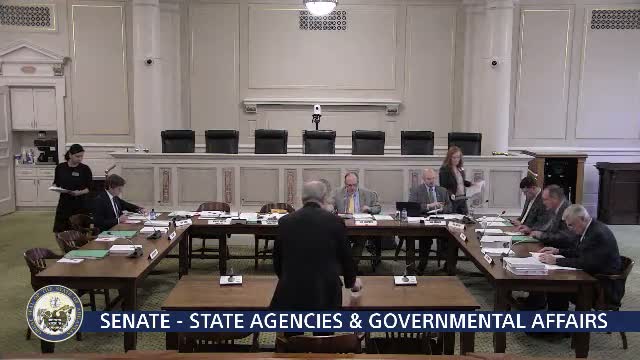
Senate committee hears sharp debate on bill to expand access to state money-management trust
Summary
Senators, Treasury officials and bankers sparred over Senate Bill 390, which would allow more state trust funds and local entities to use the State Money Management Trust. Treasury officials said participation is permissive and could boost the long-term reserve; bankers warned it could drain local deposits and raise risk and accountability concerns. The committee took no formal action.
A Senate committee on state agencies and governmental affairs heard nearly three hours of testimony Wednesday on Senate Bill 390, a measure that would make it easier for certain state trust funds, universities, counties, cities and school districts to place cash with the State Money Management Trust operated by the state treasurer.
Senator Tammy Hammer, the bill sponsor, said the measure is permissive and designed to "remove barriers" that currently prevent some trust funds from earning higher returns through the Treasury's pooled money-management program. He told committee members that increased returns would grow the state's long-term reserve fund and improve bond ratings. "We're just asking to put another tool in the toolbox," Hammer said in his opening remarks.
Treasury staff, including senior investment manager Ed Garner and Treasurer Dennis Milligan, described operational safeguards and the fund's track record. Garner and Milligan said the trust is managed to minimize default risk and that participants can request funds by close of business one day and receive them the next morning. Milligan said the program had produced tens of millions of dollars in additional returns since he took office and that those earnings have funded highways and bolstered the long-term reserve.
Banking industry witnesses and community banks pushed back. Cathy Owen, chair of the Arkansas Bankers Association and chief executive of Eagle Bank & Trust, testified the bill would create a de facto state-owned bank, put deposits into investments that are not FDIC-insured, and could remove a crucial source of liquidity for local lenders. "If school deposits are consolidated into the state fund, you remove a significant incentive to keep bank branches open in rural communities," she said. Janie Genocchio of Southern Bancorp warned of unintended consequences for county and city budgets and argued the proposal would redistribute local economic benefits to the state.
Committee members probed technical issues including collateralization requirements if funds flow back to banks, the relative risk of the trust's commercial-paper investments versus bank-secured deposits, and whether other states use similar pooled funds. Treasury staff said such intergovernmental investment pools are "widespread" and described steps the Treasury takes to manage risk and to securitize deposits when funds are returned to participating entities.
Opponents cited historical examples of risky public investing, including Orange County, Calif., while Treasury officials and the sponsor said the trust's investment policy prevents comparable exposure. The sponsor also stressed that participation would remain a local choice, not a mandate.
No motion was made on SB 390 during the hearing; the chair indicated that lack of a motion constitutes no action and that the bill could be brought back at a later date. The committee then moved on to consider other transformation-related bills.