Get Full Government Meeting Transcripts, Videos, & Alerts Forever!
Get email alerts on the Appraiser Regulation topic
No spam. Unsubscribe anytime.
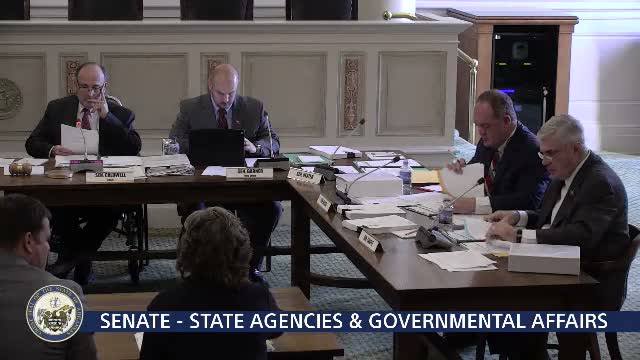
Senate panel approves appraisal-board changes to comply with federal Title 11 rules
Summary
The committee approved two bills (SB393 and SB394) updating appraisal-management-company rules, creating a registered apprentice classification for trainees, clarifying reciprocity and temporary practice permits, and adding a three-year civil statute of limitations consistent with case law.
The Senate State Agencies committee advanced two appraiser-regulation bills intended to bring Arkansas into full compliance with federal appraisal-management company rules under Title 11 (as amended by Dodd–Frank). Diana Pioski, director of Appraiser Licensing and Certification, told the committee the changes respond to deficiencies identified by the Appraisal Subcommittee and are primarily paperwork and compliance fixes.
SB393 updates appraisal management company (AMC) statutes to give the state appraiser board authority to verify that AMCs maintain systems that ensure appraisals are conducted independently and without inappropriate influence. SB394 separates trainee appraisers into a registered apprentice classification, clarifies the definition of a written appraisal, requires credentialing for appraisers completing assignments in Arkansas, and adopts a three-year statute of limitations for civil liability mirroring Arkansas case law (excluding knowing fraud or material misrepresentation).
Committee members asked about reciprocity and access for appraisers who live across state lines. Pioski said reciprocity and temporary practice permits already exist (temporary permits are issued within days for a single assignment; nonresident credentials take longer and require background checks). The temporary permit fee and application requirements were discussed; staff said the credential issuance process is straightforward and fees are modest.
After discussion, the committee passed the bills (SB393 and SB394) as presented and amended to reflect the compliance fixes. Sponsors described them as necessary to maintain federal compliance and avoid future enforcement problems for the Arkansas program.