Get Full Government Meeting Transcripts, Videos, & Alerts Forever!
Get email alerts on the National Guard Funding topic
No spam. Unsubscribe anytime.
Senate committee approves National Guard cleanup bill to protect emergency reserve funds
Summary
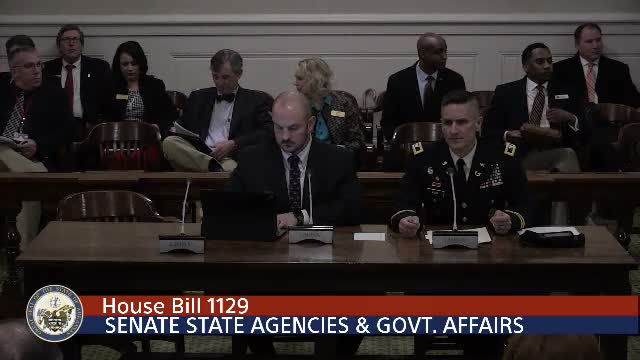
The committee approved House Bill 1129, a National Guard cleanup bill to require reimbursement of federal funds to a state reserve used for state active duty and emergency responses; Colonel Jeff Wood said the change preserves a fund for future disasters.
Senator Garner presented House Bill 1129 as a ‘‘cleanup’’ measure requested by the Arkansas National Guard to ensure reimbursements from federal disaster and training responses return to a dedicated state reserve. The bill sponsors said the change clarifies that when the Guard expends money for state active duty—such as ice‑storm response, chainsaw training or other disaster work—the federal reimbursement must flow back into the state fund so reserves remain available for future emergencies.
Colonel Jeff Wood, Arkansas National Guard, explained the practical need: when the state expends funds for emergency orders or state active duty, the federal reimbursements should replenish the reserve so the state does not deplete its emergency balance. He recounted earlier operational gaps after large storms and said the change aligns state practice with the federal reimbursement process.
Committee members asked about fiscal impact; Colonel Wood said the estimated number of affected personnel was small (he cited an average of roughly 160–300 people on these orders per year) and staff deemed the fiscal effect minimal. Several senators requested clarifying language for fiscal notes and one member asked staff to ensure consistent application across code sections.
The committee moved, seconded and approved the bill by voice vote.
The bill will proceed through the usual legislative channels for final consideration by the full chamber.