Get Full Government Meeting Transcripts, Videos, & Alerts Forever!
Get email alerts on the Committee Votes Roundup topic
No spam. Unsubscribe anytime.
Committee advances routine statutory fixes and ceremonial proclamations; several technical bills pass by voice vote
Summary
The Senate State Agencies committee passed several short, technical bills and amendments by voice vote, including minor election-code corrections and an amendment creating Arkansas Music Appreciation Day; a handful of noncontroversial measures were approved with little debate.
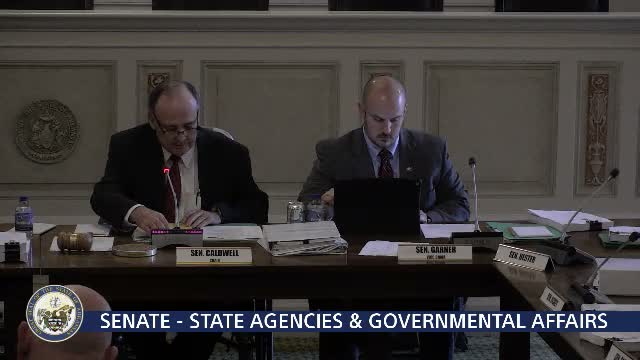
The Senate State Agencies and Governmental Affairs Committee approved several short, largely noncontroversial measures during its session.
Early in the hearing, the committee unanimously approved House Bill 1455, a one-word correction to election code language, and House Bill 1465, which removes an obsolete statutory reference to a 2004 electronic voting machine model. Sponsors described both as technical housekeeping fixes intended to align statute with current practice.
Representatives and senators also adopted an amendment to House Bill 1030 that designates an Arkansas Music Appreciation Day in May and authorizes the governor to proclaim the observance before Sept. 1 each year. The amendment was adopted by voice vote and the sponsor thanked the committee.
House Bill 1259, presented by Senator Trent Garner and Solomon Graves of the Department of Correction, was approved after sponsors explained the change: the Board of Correction would no longer be required to distribute a printed pamphlet of rules to every inmate but would make rules available electronically and provide printed copies upon request. Supporters said the change modernizes access without removing information.
Not all early measures moved forward. Representative Kavanaugh’s proposal to extend a one-year post-legislative “cooling-off” restriction to two years for employment with certain agencies failed for lack of a second.
The committee took these votes by voice; formal roll-call tallies were not recorded in the transcript for these short items. The committee reserved longer debate for more complex bills later in the agenda.