Get Full Government Meeting Transcripts, Videos, & Alerts Forever!
Get email alerts on the Entertainment Districts topic
No spam. Unsubscribe anytime.
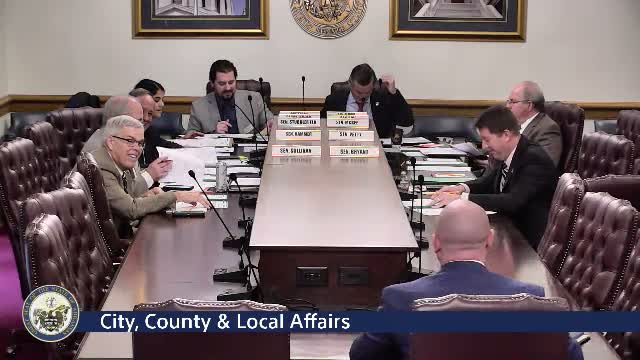
Committee deadlocks on bill removing mandatory A&P tax for entertainment districts
Summary
House Bill 10 24, which would let cities create entertainment districts without imposing a mandatory A&P (advertising and promotion) tax, failed in committee on a 4–4 roll call after opposition from public-safety and public-health witnesses who warned it would expand public drinking in dry counties.
Senator McKee introduced House Bill 10 24 to eliminate the statutory requirement that municipalities impose an A&P (advertising and promotion) tax in order to establish an entertainment district, framing the change as "returning control at the local level" and removing a state-imposed requirement for a citywide tax.
John Wilkerson, general counsel for the Arkansas Municipal League, provided background on the 2019 entertainment-district law and a 2021 amendment permitting districts in dry counties, and told the committee that the A&P tax and entertainment-district authority can be separated. "We ... support [untangling A&P commissions and A&P taxes] — it makes sense to untangle those two things," Wilkerson said.
Opponents said the A&P-tax requirement had worked as a protective element, ensuring districts were created in communities with the resources to fund policing, sanitation and oversight. Marty Page of the Arkansas Faith & Ethics Council testified: "This bill will increase public drinking ... It will dramatically increase the numbers of entertainment districts in the state." Theresa Belew, former executive director of Mothers Against Drunk Driving, said the A&P tax helps defray city costs for policing and sanitation when activity spills into public spaces. "When there's an entertainment district in the city ... the city needs to be the one who police and also provide sanitation," Belew said.
Supporters, including McKee, said the bill does not remove local ordinance or vote requirements for establishing a district and argued the change is about tax fairness and local choice. McKee told the committee that existing local processes — ordinances and, where applicable, votes — still govern the establishment of any entertainment district.
After sponsor closing, the committee took a roll-call vote. The tally was 4–4, and by tie the bill failed to advance out of committee.
What happens next: The sponsor may refile or refine the bill for a future hearing; committee members suggested working with stakeholders to address enforcement and public-safety concerns raised during testimony.