Get Full Government Meeting Transcripts, Videos, & Alerts Forever!
Get email alerts on the Tort Reform topic
No spam. Unsubscribe anytime.
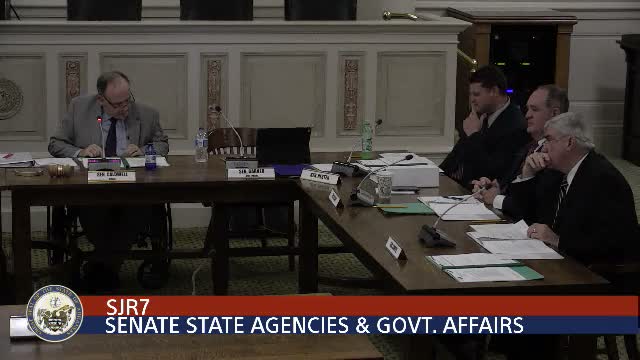
Committee hears competing evidence on SJR 8 to let Legislature cap damages
Summary
Senator Hester told the committee SJR 8 would let the Legislature set punitive and non-economic damage caps; supporters said caps help recruit doctors and businesses, while opponents and public witnesses argued Arkansas data do not show outsized malpractice rates and warned caps could limit victims' compensation.
Senator Hester told the Senate State Agencies Committee that SJR 8 would allow the General Assembly to establish caps on punitive and non-economic damages. "If we value human life in Arkansas, we'll pass these economic or non economic damages caps so that we can get doctors here to care for our mothers," Hester said during his presentation.
Proponents framed the measure as an economic and health-care competitiveness tool. Hester cited studies and examples from other states to argue that damage caps can attract physicians and employers. Several senators described rural shortages of key providers and high liability costs for certain specialties such as obstetrics.
Opponents included attorneys and public witnesses. Senator Bond, identifying himself as a plaintiff—s lawyer, warned that setting caps via the constitution without detailed implementing legislation could arbitrarily restrict juries and deny individualized justice. Chad Gallagher (Protect Arkansas Families) testified against the amendment and presented data he said showed Arkansas malpractice premiums are comparable to or lower than neighboring states and that rural doctor shortages are a national trend.
Committee members stressed that the amendment does not itself set a dollar cap; it would move the authority to set limits to the Legislature and implementing statutes. Questions focused on where the line between punitive and non-economic damages should be drawn, whether judges already reduce verdicts via remititure, and what the evidence shows about the relationship between caps and provider recruitment.
No formal votes were taken. Sponsors said implementing legislation would be the venue for the substantive policy fight over any caps if voters approve a constitutional change.