Get Full Government Meeting Transcripts, Videos, & Alerts Forever!
Get email alerts on the State Ag Department Reorg topic
No spam. Unsubscribe anytime.
Lawmakers, growers spar over plan to fold plant board, forestry and natural resources into a single Department of Agriculture
Summary
A legislative committee reviewed House Bill 11-17 to consolidate several agencies into a cabinet-level Department of Agriculture; witnesses including the Arkansas Agricultural Alliance urged clearer protections for fee-funded accounts, plant board independence and limits on newly described law‑enforcement powers for designated employees.
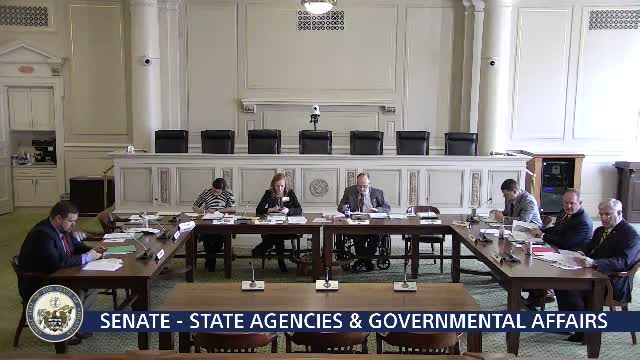
A Senate committee reviewed House Bill 11-17 in a lengthy session that brought agency staff and agricultural industry representatives together to debate a proposed reorganization that would place the State Plant Board, Forestry Commission, Livestock and Poultry Commission and other entities under a cabinet-level Department of Agriculture.
The bill’s sponsors and staff said the measure is intended to reduce silos and improve coordination without adding recurring state funding. Amy Fletcher, chief transformation officer for Governor Hutchinson, told the committee the transformation “has no additional funding” and that agencies would “have to operate on the budgets that you all are approving.” Secretary Wes Ward of the Arkansas Agriculture Department said much of the language reflects existing authority and that the statutory changes are largely intended to consolidate code provisions for clarity.
Industry witnesses and several senators pushed back. Larry Giroux of the Arkansas Agricultural Alliance said the alliance had four main concerns: “How will this new structure help Arkansas agriculture?” potential costs and staffing for a much larger agency, preservation of special revenue funds, and safeguarding the technical, science-based independence of the State Plant Board. Cal McCaslin, also speaking for the Alliance, warned that the consolidated agency could become “very large” and asked whether the secretary could manage new responsibilities “with no extra money.”
Several legislators focused on statutory details that, they said, could weaken the Plant Board’s independence or allow fee-generated special revenues to be commingled. Committee members repeatedly flagged the bill’s use of “may delegate” language and asked whether some provisions ought to read “shall” to preserve mandatory duties and clear lines of responsibility. Marty Garrity of the Bureau explained the draft seeks to avoid siloing by permitting coordination across boards and employees; Garrity and Secretary Ward repeatedly said existing special revenue provisions were intended to be protected.
The bill also moves and clarifies authority now located in the Forestry Commission to allow certain employees to perform law‑enforcement functions across the consolidated department. A committee member asked whether the changes would permit agency employees to exercise “police powers” without separate legislative oversight; Secretary Ward and staff replied the authority exists today within the Forestry Commission statutes for forestry‑related law enforcement and the bill transfers that authority into the new department language while leaving the appropriations (personnel listed in the Appropriations Act) intact.
Witnesses pressed for textual fixes. The Arkansas Agricultural Alliance recommended inserting language to protect “all current and future revenue collected” and to preserve Plant Board authority to spend fee revenues for research and enforcement. Former Plant Board members told the committee the board has long been a self‑sustaining regulator under the Plant Act of 1917 and urged retaining structural safeguards so technical decisions remain guided by science rather than political influence.
Technical details also drew sustained interest. Committee members and witnesses discussed which appointments remain governor‑made, how directors would report to a secretary, whether designees could issue subpoenas in lieu of commissions, and whether laboratory functions funded by special revenue would be protected from commingling with general revenue when they perform broader tasks. Butch Calhoun, director of the State Plant Board, said about 50 weather stations across the state are part of the board’s network and acknowledged some units were down; he said parts are on order and the appropriation includes funds to repair and modernize the system.
Committee members asked staff to flag and revise specific language (including several instances of added “designee” authority and the “may/shall” wording) and said they would follow up offline on legal and constitutional questions raised at the hearing. No final vote on House Bill 11-17 was recorded during the hearing; staff agreed to prepare edits and clarifications for future consideration.
The committee closed public testimony after hearing from several industry witnesses and members of the Arkansas Agricultural Alliance; representatives thanked the committee for the opportunity to comment and said they were willing to work with staff on technical edits.
What’s next: Committee staff will compile the technical fix suggestions (special revenue language, delegation wording, and appointment/authority clarifications) and return revised text for further review before any final committee vote.