Get Full Government Meeting Transcripts, Videos, & Alerts Forever!
Get email alerts on the Child Welfare topic
No spam. Unsubscribe anytime.
DCFS reports 29,616 child-abuse hotline calls in SFY 2024; officials flag foster-parent recruitment and regional differences
Summary
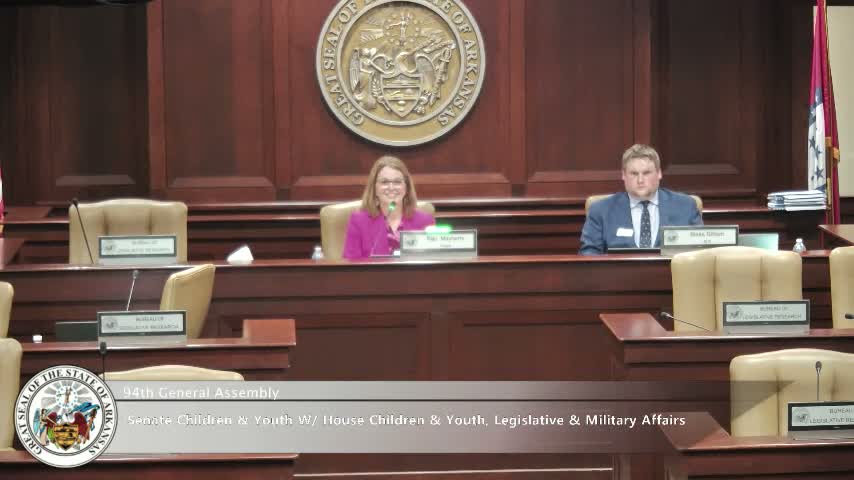
Division of Children and Family Services Director Tiffany Wright told the Senate Children and Youth Committee that 29,616 reports were accepted by the child-abuse hotline in state fiscal year 2024, 3,553 children were in foster care at year-end and adoptions totaled 730; members pressed the agency on foster-family recruitment and area-level differences in substantiation rates.
Tiffany Wright, director of the Division of Children and Family Services, told the Senate Children and Youth Committee that DCFS received 29,616 reports accepted by the child-abuse hotline in state fiscal year 2024 and that about 24,000 of those routed to DCFS while roughly 5,500 went to the crimes-against-children division.
Wright said the number of children in foster care at the end of the fiscal year was 3,553 and that the state finalized 730 adoptions during the year. "Reunification remains at 42% followed by adoption and then relative custody," Wright said, and she added that overall 92% of children exiting care achieved permanency by returning home, going to relatives or moving to another permanent arrangement. She also noted the state had fewer than 200 children waiting for adoption in November.
Why it matters: the figures frame where the agency has seen progress and where it still faces operational needs. Lawmakers focused questions on whether recruitment of foster families is keeping pace with needs, particularly for older youth and children transitioning from higher-level treatment placements.
Committee members pressed DCFS on recruitment and regional variation. Representative Glenn Barnes asked whether the state still faces a recruitment crisis despite the lower foster-population count; Wright replied, "We still do have, even with the decline of children in foster care, our greatest need is still recruitment of foster, foster families to care for children when they can't be with a relative, safely with a relative." She told the committee the agency is prioritizing relative placements and working with providers on prevention and case-mining to identify potential kin placements.
Members questioned the timeliness and consistency of investigations. Wright said timeliness of initiating investigations had increased slightly since the quarterly report and that the agency continues to monitor and address performance. She reported that prevention-of-recurrence rates have held at roughly 4% within six months and 5% within 12 months over the past four fiscal years.
Wright also reviewed the Garrett's Law report, which DCFS presents annually. She said DCFS received 1,360 Garrett's Law reports in SFY 2024 (an 11% decline from the prior year). The most commonly cited substance in those reports was THC/cannabis, followed by amphetamines and methamphetamines. On newborns reportedly exposed to substances, Wright said 76% did not have reported health problems in the data presented.
Members probed regional differences in substantiation and removal rates. Representative Springer noted large changes in some areas and asked what county leaders had been doing differently; Wright said DCFS conducted case reviews in areas with notable shifts, identified factors such as prior agency involvement, inter-state moves and, in some cases, documentation like medical-marijuana cards and false positives, and then met with county leaders to align decision-making.
Data access and transparency: Wright said the governor's executive order directs DCFS to publish monthly data and that county-level, monthly charts are available on the DHS website; she offered to share a direct link with committee members.
Wright closed by reminding members of volunteer opportunities around the holidays, including "Christmas at the capitol" on December 12 and a Candyland Christmas event for families waiting for adoption, and she introduced her new assistant director, Amber Sartain.
The committee did not take additional formal action on DCFS recommendations during the meeting; members asked for quarterly updates on relative-placement percentages and other performance metrics and were promised follow-up information and links to public data.