Get Full Government Meeting Transcripts, Videos, & Alerts Forever!
Get email alerts on the Assisted Living Medicaid Rates topic
No spam. Unsubscribe anytime.
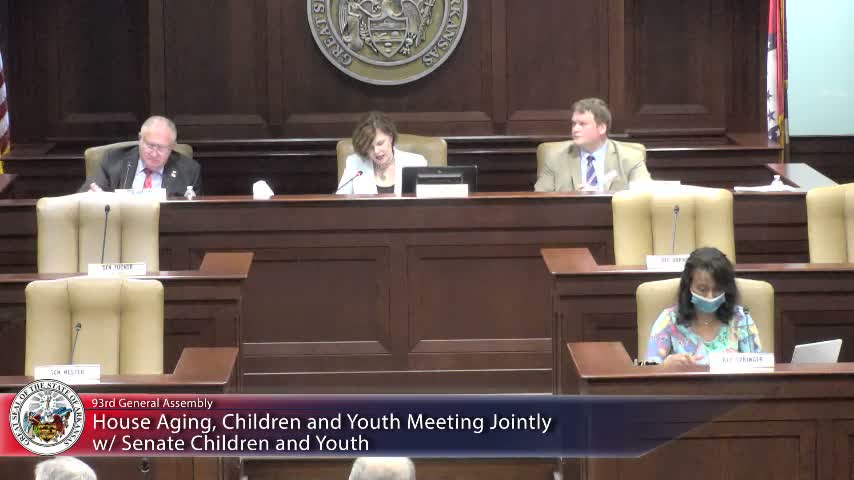
Arkansas committee hears operators warn of assisted‑living closures, votes to ask DHS to re‑review Medicaid rates
Summary
Operators told the Senate Children and Youth Committee that reimbursement cuts and rising COVID and labor costs have pushed assisted‑living providers toward closure; DHS defended its rate review and the panel voted to request a new DHS review of assisted‑living reimbursement rates.
Madam Chair convened a Senate Children and Youth Committee session on assisted living and called industry witnesses to describe financial stresses facing Arkansas providers. Operators said state reimbursement cuts, combined with COVID‑related costs and higher wages, have led to closures and threatened residents’ placements.
Ed Holman, chair of the Arkansas Residential Assisted Living Association, told the committee the state has "102 assisted living facilities in the state with 7,275 beds," and that "we are, however, limited to a maximum of no more than 1,200 residents statewide at any time." Holman and other operators said the Medicaid waiver payment of $67.25 per day for care has lagged far behind providers’ cost estimates.
Operators offered specific examples: Mike Shepherd, who said he has national assisted‑living experience, testified that eight facilities have closed, affecting roughly 400 residents and about 300 employees; Scott Kingsborough and Todd Hightower described buildings in default and months‑long Medicaid approval delays that left providers carrying unreimbursed costs. Hightower said assisted livings received about $888 per licensed bed in CARES Act grants, which he contrasted with higher per‑bed aid in some skilled nursing settings.
The industry asked the committee to reconsider the reimbursement approach. Providers cited an outside cost study that suggested an $86‑a‑day pre‑COVID rate and told members they were seeking a statewide rate in the $86–$95 range or reinstatement of a prior automatic cost‑of‑living adjustment.
Mark White, Department of Human Services chief of legislative and intergovernmental affairs, told the committee DHS conducted multiple rate reviews and leaned on actuarial work (including Milliman) and provider cost surveys. White said the department found prior assisted‑living rates were substantially higher than providers’ reported costs and noted a federal limitation: Medicaid waivers cannot cover room and board, which beneficiaries must pay from Social Security or SSI. White said Medicaid pays for a minority of assisted‑living residents and that DHS left the current waiver rate unchanged pending CMS renewal.
Members pressed DHS on access, the waiver cap and regional variation. Senators and representatives asked for data showing where displaced residents went after facility closures, documentation of ADFA/HUD financing risks, and copies of the DHS rate‑review report. White agreed to provide the department’s 69‑page rate review and related materials to committee staff.
Industry witnesses also reported inconsistent surveyor guidance about clinical staffing; several providers said surveyors had begun 'tagging' facilities for lacking on‑site LPNs or RNs and, in some cases, relayed those directives verbally. Members asked staff to collect written citations and other documentation from providers.
After debate, Representative Hudson moved — and the committee seconded — a motion requesting that DHS re‑review assisted‑living rates "with an eye towards increasing the rates for assisted living facilities to be more commensurate with their actual costs." The committee approved the motion by voice vote.
The committee asked providers to submit documentation of costs, surveyor citations and the Milliman materials; staff will distribute DHS reports to members. The hearing ended with the chair adjourning the session.
Next steps: DHS said it would send the rate‑review report and related materials to the committee; any change to the waiver rate would require a DHA recommendation, CMS approval and a formal rule process.