Get Full Government Meeting Transcripts, Videos, & Alerts Forever!
Get email alerts on the COVID19 Childcare Impact topic
No spam. Unsubscribe anytime.
DHS: COVID‑19 forced closures, staffing strain and CARES Act funds expanded emergency childcare
Summary
Arkansas Department of Human Services reported pandemic-driven intermittent and permanent childcare closures, staffing shortages, and use of roughly $41 million in CARES Act CCDF funds to pay programs, reimburse pandemic costs and expand slots for essential workers; several funding lines may be at capacity.
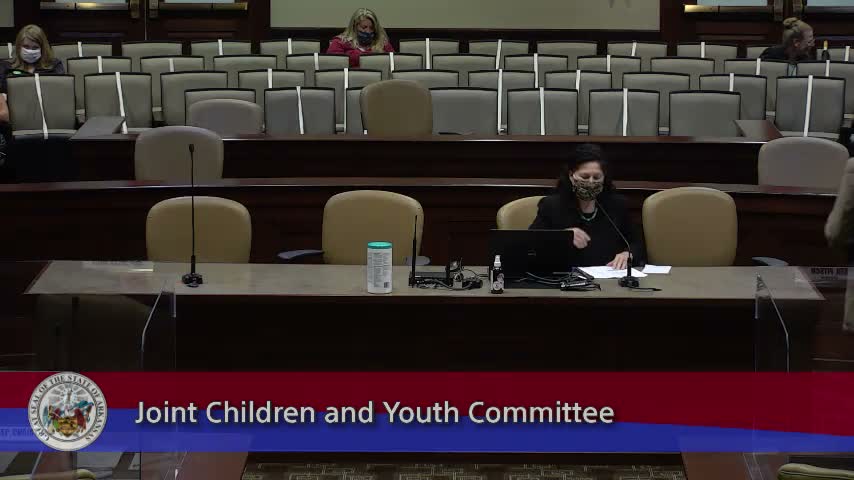
Tanya Williams, director at the Arkansas Department of Human Services Division of Child Care and Early Childhood Education, briefed the committee on the pandemic’s effect on child care and the state’s emergency funding response.
Williams said Arkansas licensed about 2,000 programs in March and had capacity to serve roughly 194,000 children. The pandemic prompted both temporary and permanent closures—20 programs have closed permanently (13 centers and 7 family homes), removing approximately 1,053 seats and serving roughly 1,000 children between them. Many other facilities closed briefly or shifted to virtual models such as Head Start virtual programming.
DHS has tracked and used federal CARES Act Child Care and Development Fund (CCDF) dollars—Williams cited approximately $41,000,000 in CCDF CARES Act funding routed to childcare supports. She said about $2.9 million was paid to programs that remained open, roughly $6.3 million supported pandemic requirements (masks, staff/child screening, cleaning supplies), and DHS has reimbursed deep cleaning costs (figures discussed ranged from $31,978 to a little over $40,000 for aggregated reimbursements). Williams said the agency had spent about $24.5 million as of Oct. 5 and roughly $26 million as of the week of the presentation and that some emergency categories (such as payments for essential workers) may be at capacity without additional funding.
The agency added more than 6,000 families to support essential‑worker childcare and reported it could temporarily support those families through year‑end, but could not add more families without further funds. DHS is monitoring daily case counts and noted COVID‑19 cases reported among program attendees—"about 273 children as of October 5" and "416 staff," with numbers rising.
Williams described operational challenges: providers’ financial strain when families stop attending, increased requests for state contracts from previously independent providers, and hiring shortages as staff contract COVID‑19. The division emphasized it would continue to track data and provide resources to providers and families; slides and handouts were provided to the committee.