Get Full Government Meeting Transcripts, Videos, & Alerts Forever!
Get email alerts on the Squatter Rights topic
No spam. Unsubscribe anytime.
Senator proposes 'squatter' bill modeled on Florida; lawmakers ask for legal review
Summary
Senator Caldwell presented a draft squatter-rights bill modeled on a Florida law that he said was upheld in litigation, proposing limited sheriff authority to remove uninvited occupants; members asked for BLR review and cautioned against mixing civil and criminal remedies.
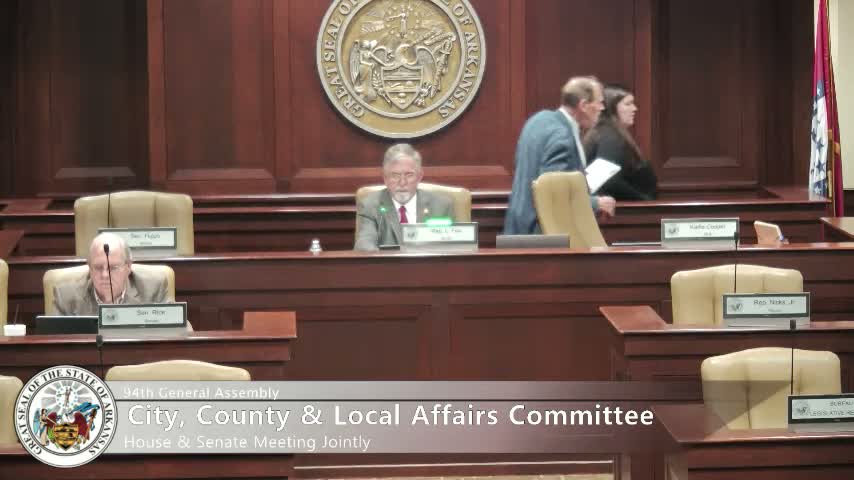
Senator Caldwell on the City, County & Local Affairs Committee introduced a draft squatter-rights bill (Exhibit D) that he said is modeled on a Florida law and "was upheld, in litigation." He told the committee the bill is intended to address people who occupy property without permission, not to undermine tenant protections.
Caldwell described practical harms facing some homeowners, citing one constituent who inherited a house and cannot afford legal fees to evict unauthorized occupants. "She has to hire a lawyer and pay, anywhere from $1,500 to $7,000 to evict them off her property," he said, arguing the cost is often unrecoverable for small-property owners.
Under the model Caldwell presented, he said, "the sheriff, under certain circumstances with certain documents being served to the squatters," could use law-enforcement authority to remove people without the homeowner first pursuing a court eviction. "This does not affect tenant rights," he added, and emphasized the committee would draft separate bills for squatters and for tenant-rights reforms.
Members asked questions about legal safeguards and statewide variations. "You might want to double check whether there would need to be an order by the court authorising the sheriff," Representative Dahlby said, urging review to avoid constitutional or procedural problems. Senator Stubblefield asked whether existing criminal-trespass laws already allow removal, noting that posted property can prompt criminal charges; Caldwell responded that arrest does not always achieve immediate removal and that current civil procedures often require an owner to obtain a court order at substantial cost.
Caldwell said the text is a "point of beginning," that he will send the draft to the Bureau of Legislative Research for review, and that he will convene a brainstorming meeting with Representative McGrew and others to refine language and solicit stakeholder input. No vote was taken on the draft during the meeting.
Next steps: the sponsor will submit the draft for legal review, refine statutory language to avoid mixing civil and criminal remedies, and notify members and stakeholders of a forthcoming brainstorming meeting.