Get Full Government Meeting Transcripts, Videos, & Alerts Forever!
Get email alerts on the Immigration Policy topic
No spam. Unsubscribe anytime.
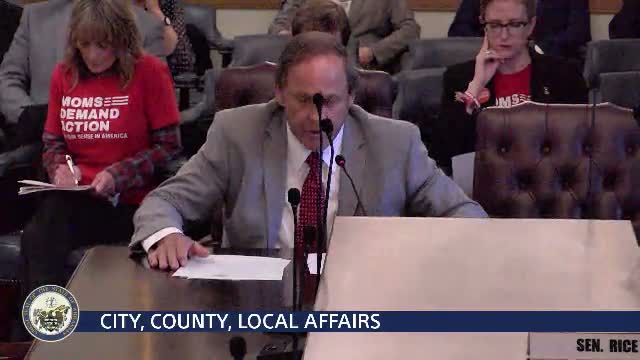
Senate committee approves bill prohibiting municipal "sanctuary" policies after hours of testimony
Summary
The Senate City, County & Local Affairs Committee passed SB411, which defines and bans municipal 'sanctuary' policies and establishes penalties. Supporters said it protects public safety and federal grant eligibility; opponents warned it is vague, risks racial profiling and would chill trust with immigrant communities.
The Senate City, County & Local Affairs Committee on [date not specified] approved Senate Bill 411, a measure that defines "municipal sanctuary policy," prohibits such policies and creates penalties for violations. The vote followed several hours of public testimony both for and against the bill.
Sponsor remarks framed the measure as narrowly aimed at municipal practices that, the sponsor said, interfere with federal immigration law and undermine public safety. The sponsor told the committee the state attorney general reviewed the measure and found no conflict with federal law.
Supporters at the committee hearing included Lance Hines, a Little Rock city director, who said SB411 would reflect existing municipal practice and protect grant eligibility tied to Department of Justice conditions; Dennis Bosch, a Garland County resident, and other residents described criminal incidents they said justified stronger action.
Opponents, including Mireya Wright and Jocea (Joan) Adcock of Arkansas United and Little Rock city director Joan Adcock, argued there is currently no effort by Arkansas cities to establish sanctuary status and that the bill’s language is too broad. Mireya Wright said the bill’s references to "policies" (not only ordinances) could chill local trust-building and expose cities to lawsuits. Jocea Velasquez, advocacy director for Arkansas United, warned the bill could encourage racial profiling and undermine community policing efforts.
Legal and research claims were a central point of dispute. Witnesses opposing the bill cited Title 8 of the United States Code and said the federal law prohibits forbidding communication with federal immigration authorities but does not require localities to perform federal enforcement actions. Supporters cited statistics they attributed to federal sources and private analyses to argue sanctuary policies harm public safety; opponents countered with studies and local examples they said show immigrants are less likely than native-born U.S. residents to commit crimes and that local relationships with immigrant communities improve public safety.
The committee recorded a voice vote in favor of SB411; the chair announced that the bill had passed out of committee.
What happens next: with committee approval, SB411 moves to the full Senate for further consideration.
Note: this article attributes all statistics and contested factual claims to the people who made them at the hearing; where witnesses offered differing research or numbers, those differences are described as competing claims rather than established fact.