Get Full Government Meeting Transcripts, Videos, & Alerts Forever!
Get email alerts on the Property Management Licensing topic
No spam. Unsubscribe anytime.
Senate panel hears split testimony on Bill 1700, which would change property-manager licensing
Summary
The Senate Insurance & Commerce Committee heard competing testimony on Bill 1700, which would create exemptions affecting property-manager licensing and oversight. Proponents urged deregulation; opponents warned tenants could lose fiduciary protections and remedies under the Arkansas Real Estate Commission.
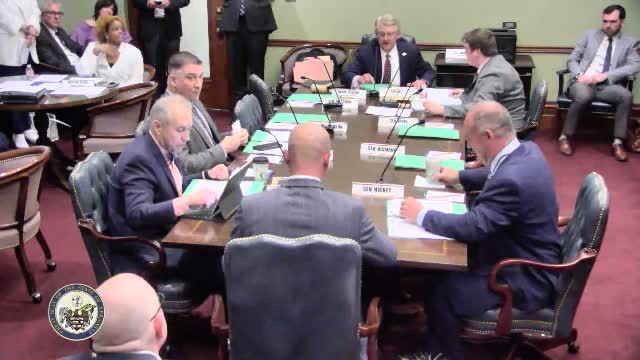
The Arkansas Senate Insurance & Commerce Committee on Thursday heard competing testimony on Bill 1700, legislation that would create exemptions affecting whether some property managers must hold a real estate license.
Proponents argued the bill would reduce regulatory burdens; opponents warned it could remove oversight that currently protects tenants.
Daniel Brown, testifying that he works in property management, opened with a personal appeal that reshaped prepared remarks and urged the committee to consider tenants as the bill—s primary victims. "We're missing the tenants. There's not 1 tenant sitting in this room. They can't afford to be here," Brown said, asking senators to vote for whatever helps tenants most.
Attorney and national instructor Dale Carlton, speaking against the bill, highlighted three concerns he said should guide the committee—s approach: people, education and legal issues. Carlton said about "34 to 35 percent" of Arkansans are renters and argued many are low-income and lack resources to pursue legal remedies. He described existing consumer protections available through the Arkansas Real Estate Commission and fair-housing offices, including a recovery fund that can make harmed parties whole.
Carlton also cited a 1981 Arkansas Supreme Court decision (Polk County v. Suggs et al.) to underscore a legal risk he attributed to the bill: the court—s ruling, as described by testimony, allows licensed agents to complete certain attorney-approved lease and contract forms, but that authority is tied to being covered by commission oversight. "At the moment we pass this bill ... they will immediately become an authorized practice of law for them to fill out leases in representation of somebody else," Carlton said, arguing that removing licensure could shift unauthorized-practice questions and reduce tenant protections.
Carlton warned of additional technical consequences, including how fidelity bonds and fiduciary duties are structured: he said fidelity bonds typically protect property owners, and fiduciary protections tied to license law aid tenant claims. He pressed the committee to convene stakeholders—groups, including the Arkansas Real Estate Commission and fair-housing advocates, before altering the oversight framework.
In contrast, Paul Calvert urged skepticism of regulation for regulation—s sake, saying many licensing rules lack evidence they improve consumer outcomes and that excessive rules can stifle markets and enrich practitioners.
Doyle Yates, identified as an executive vice president at Coldwell Banker Harris McKinney Faucette and a former commission member, described current pathways to licensure and the waiver process. Yates said someone who passes the real estate exam can pursue property-management work, and the commission has granted experience-based broker waivers in multiple instances. He also described the commission—s complaint process and the recovery fund as existing guardrails for tenants.
Committee members pressed witnesses about the waiver criteria that appear in the application language as "documentation as the commission deems satisfactory," with senators expressing concern the phrase leaves subjective discretion. Witnesses and commissioners discussed how the executive director and the five-member commission interact on waiver decisions and noted applicants may appeal an executive-director denial to the commission.
The committee took no final vote on Bill 1700 during the morning session and recessed to avoid overlapping with the joint budget committee, planning to return roughly five minutes after the joint budget adjourns.
What happens next: The committee will reconvene after the joint budget meeting; no further action was recorded in this transcript segment.