Get Full Government Meeting Transcripts, Videos, & Alerts Forever!
Get email alerts on the Public Records topic
No spam. Unsubscribe anytime.
Senate committee backs bill requiring counties’ public data in usable formats after vendor testimony
Summary
The committee passed House Bill 18‑84 as amended to require counties (or their contractors) to provide public records in common file formats that preserve usability but do not disclose proprietary code; vendors and technologists urged caution and additional stakeholder review, while sponsors said the data belongs to counties.
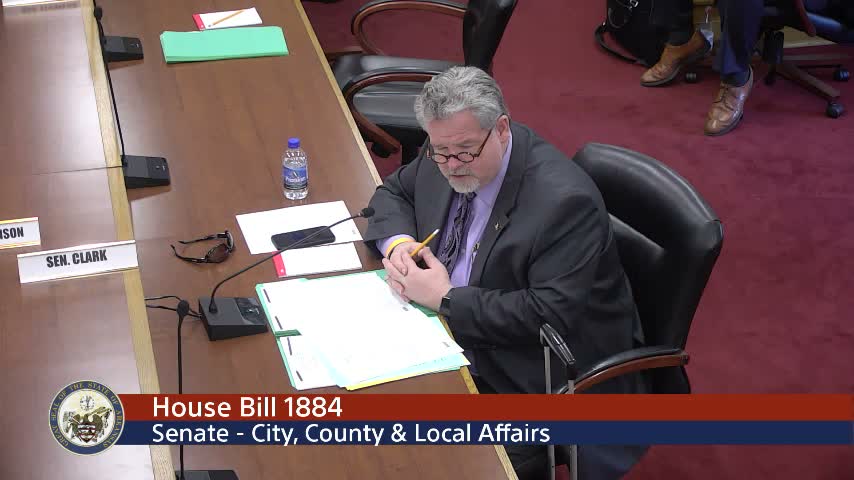
The Senate City, County & Local Affairs Committee voted to pass House Bill 18‑84 as amended after a lengthy debate over whether counties and third‑party record providers must deliver public records in usable, common file formats.
The bill’s sponsor told the committee the measure is limited to county-owned data subject to public‑records law and aims to make those extracts usable for requesters. “This data belongs to the counties, and it should be available to those that want to see it in a usable format,” the sponsor said.
Apprentice Information Systems president Alan Jennings told the committee his company already provides bulk FOIA extracts in Microsoft Excel or Access and could provide comma‑separated values (CSV) if requested. “The data that the bulk data requesters are receiving today are Microsoft Excel spreadsheets and Microsoft Access databases,” Jennings said, adding that changing formats can typically be negotiated between counties and vendors.
Industry representatives and technologists urged more time and stakeholder input. Doug Matteo, a former state representative who said he consults for technology firms, urged additional review and warned the bill was filed quickly, saying the subject is technically complex and “probably necessary” to study further. Database engineer Russell Dela Rosa said some amendment language could reintroduce proprietary or exempt data requirements and that requiring a list of internal file formats could reveal design details about a vendor’s system.
The amendment adopted in committee narrows earlier language by removing references to preserving original proprietary functionality and instead requires public records in a “common file format that does not disclose proprietary software code” and that “does not impair accessibility and usability.” Several senators said the amendment addresses the vendors’ main concerns; vendors countered they would prefer private negotiation but accepted that the amendment clarified intent.
After questions and closing remarks, the committee voted to pass the bill as amended. The chair adjourned the committee; no further votes on this bill were recorded in the hearing.