Get Full Government Meeting Transcripts, Videos, & Alerts Forever!
Get email alerts on the Tobacco topic
No spam. Unsubscribe anytime.
Wholesalers’ notice bill aimed at ‘hot checks’ fails in Senate committee
Summary
A proposal to let wholesalers notify tobacco regulators when retail customers miss payments — blocking those retailers from buying from other wholesalers until debts are cleared — drew dispute-process concerns and failed in the Senate City, County & Local Affairs Committee.
State Sen. Barr Hester told the Senate City, County & Local Affairs Committee that House Bill 18‑76 was designed to stop a recurring pattern in the tobacco supply chain where a retail customer runs up debts at one wholesaler, is cut off and then moves to another wholesaler without settling the prior balance. “It just allows, it helps wholesalers from having customers game the system,” Hester said.
Small wholesalers and trade representatives told the committee they back the measure and said it targets “hot checks” and other short-term nonpayment. “This bill is just, really dedicated mainly for hot checks,” said John Haugen, owner of Tom Fitz Tobacco Company in Pine Bluff, who testified that wholesalers sometimes wait 10–30 days or longer to recover funds when checks bounce and that retailers can shift suppliers to avoid payment.
ATC Director Doorley Chandler urged caution, saying the bill as drafted would require the agency to act on past-due invoices and could lead to administrative suspensions of permits when disputes continue. Chandler described the process in the bill: after a wholesaler notifies ATC of a past-due invoice or insufficient funds, ATC would notify other wholesalers; if the debt is not reported satisfied within the bill’s timelines the vendor’s permit could be suspended. He warned that prolonged civil disputes could leave retailers administratively barred from buying and selling tobacco products.
Committee members pressed on dispute-resolution safeguards and on whether rulemaking could add protections. Chandler said rules must remain within the statute’s language and could not create new statutory rights such as automatic circuit-court review. Members expressed sympathy for creditors but concern over the risk of misuse and the administrative burden on ATC.
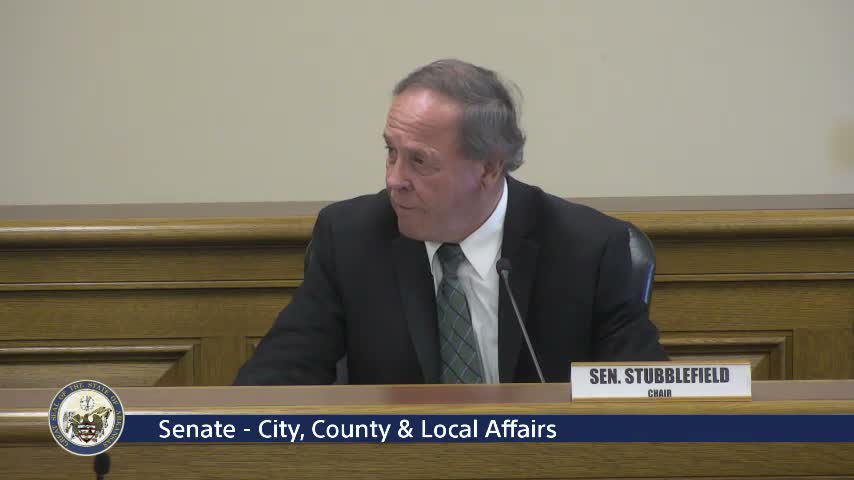
The chair announced the committee’s action after further discussion: the measure did not advance. The committee did not record a roll-call vote on final passage; the chair stated that the bill fails.
The committee heard the bill’s sponsor, industry representatives and the ATC director; no additional motions or amendments were adopted on HB 18‑76. The committee moved on to other business afterward.