Get Full Government Meeting Transcripts, Videos, & Alerts Forever!
Get email alerts on the Improvement Districts topic
No spam. Unsubscribe anytime.
Arkansas committee hears bill to let improvement districts forgive some delinquent assessments; residents warn of favoritism and constitutional risk
Summary
Senate Bill 182 would let municipal improvement district boards permissively forgive delinquent improvement-assessment fees to clear titles on vacant lots. Witnesses from Cherokee Village warned it could enable preferential treatment, violate constitutional limits and shift costs to other taxpayers; sponsor said he will amend and return the bill.
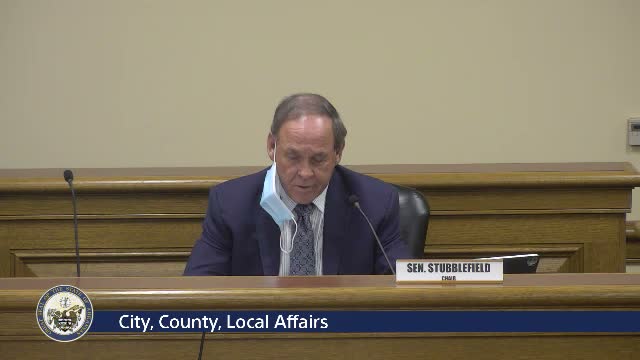
Senate Bill 182, introduced in the City, County & Local Affairs Committee, would give boards of municipal improvement districts the option to cancel accumulated delinquent improvement-assessment fees after they have accrued, a change backers say would free small vacant lots for sale and reuse.
The bill’s sponsor told the committee the change is permissive, not mandatory, and was drafted in consultation with the Commissioner of State Lands to amend the sections of code governing municipal improvement districts and related suits. "I'm not saying that they have to. I'm not saying that they should. I'm just giving them the option," the sponsor said while describing a case in Horseshoe Bend where assessments exceeded land value.
Why it matters: Improvement-district assessments can accumulate for decades. Sponsors said those unpaid assessments can make otherwise marketable lots effectively unsellable, leaving parcels vacant and imposing a burden on neighbors who continue paying. The bill aims to clear a legal path for those lots to return to taxable, productive use.
Opponents focused on fairness, constitutional limits and governance. David Grigger of a Cherokee Village watchdog group told senators that allowing boards to forgive assessments would "effectively create two classes of property ownership within the improvement district" and raised equal-protection and public-purpose concerns under provisions of the Arkansas Constitution and common law. "This bill would allow for the board of commissioners of an improvement district to selectively forgive delinquent annual assessments as they choose," Grigger said, adding that forgiveness could be treated as providing private benefit from public funds and could unsettle bond financing and accounting for districts.
Cherokee Village resident William Matsoboba described governance problems he said are present in his community’s suburban improvement district and urged structural reforms. He told the committee the SID has in his view directed spending toward private contractors and that an appointed, self-perpetuating board creates opportunities for favoritism. "If these good old boys that run this suburban improvement district are allowed to go out and do whatever they want, I guarantee you you're going to have corruption," Matsoboba said.
Committee members asked technical and constitutional questions. Senators queried whether improvement-district assessments are remitted to the Commissioner of State Lands after three years, whether auction notices disclose outstanding SID fees, and whether statutory language could be limited so forgiveness applies only when cumulative assessments exceed appraised land value. Sponsor and witnesses said practices vary by district and that a 2011 statutory change removed certain consolidation powers from the Commissioner of State Lands, which complicates a simple statutory fix.
Next steps: The sponsor told the committee he had not seen the opposition comments until recently, welcomed the feedback and said he would return with an amended version. The committee did not take a vote on SB182 and the bill was set aside for revisions.
Notes: Testimony during the hearing repeatedly cited local experience in Cherokee Village and Horseshoe Bend, including examples where an assessed SID charge exceeded a lot’s market value. The transcript includes debates about whether restoring the Commissioner of State Lands' authority to combine assessments with delinquent taxes would be a preferable remedy.