Get Full Government Meeting Transcripts, Videos, & Alerts Forever!
Get email alerts on the Adult Education topic
No spam. Unsubscribe anytime.
Adult-education directors ask for more funds, describe workforce, diversion and distance-learning needs
Summary
Directors from Crawford County, Fort Smith and the Arkansas Adult Learning Resource Center told the committee adult education now includes workforce training, court diversion and broadband-dependent instruction and has not seen a funding increase in about 30 years; they asked legislators for additional resources and data support.
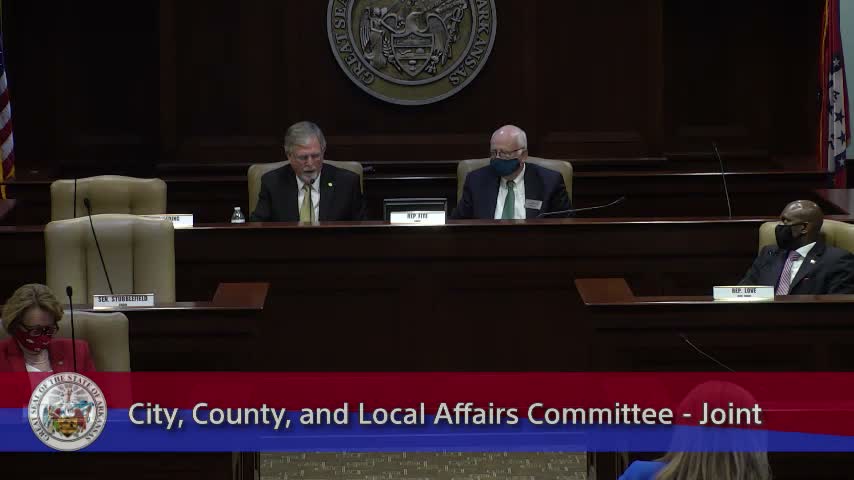
Directors of adult-education programs from Crawford County and Sebastian County told the City, County & Local Affairs Committee that their programs have evolved into workforce and diversion centers and need more funding to sustain staff and distance-learning services.
Debbie Faubus, director of Crawford County Adult Education, and Kathleen Dorn, director of adult education for Fort Smith schools, described services beyond GED instruction: English-language classes, SNAP and TANF case managers, court liaisons, pre-apprenticeship and CNA training inside jails, and community-diversion programs that connect participants to jobs and services. Faubus said the programs have not received a funding increase in about 30 years.
Dorn recounted success stories of formerly incarcerated students who completed career-readiness certificates and obtained steady work; Faubus described a county estimate that alternative-sentencing programs saved roughly $1 million over three years by reducing jail days. Committee members asked for breakdowns of figures cited and whether federal CARES Act funds might be used for hotspots or equipment; presenters said adult education largely did not receive CARES funding directly and that Sebastian County spent about $10,000 on Chromebooks and phones to maintain instruction during the pandemic.
The audience also asked about a statistic cited in testimony that about 470,000 Arkansas adults had not finished high school; presenters said the figure came from the census for the prior calendar year and the committee requested further disaggregation (for example, how many of those individuals are incarcerated or court-involved).
Representatives expressed support for a larger, coordinated approach; presenters welcomed the possibility of a statewide initiative to expand alternative sentencing and workforce-aligned programs. The committee requested follow-up data on program reach across counties and funding needs before budget decisions.
Next steps: presenters said they will provide requested breakdowns and the committee may consider funding requests during budget deliberations.