Get Full Government Meeting Transcripts, Videos, & Alerts Forever!
Get email alerts on the Public Safety Protest Response topic
No spam. Unsubscribe anytime.
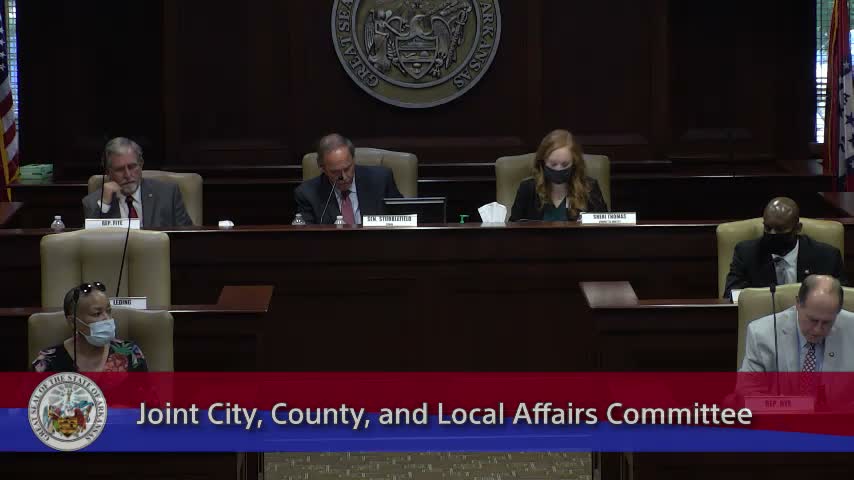
Arkansas lawmakers hear conflicting accounts from Capitol and Little Rock police on protest response
Summary
Capitol Police and the Little Rock Police disputed who controlled operations during three nights of protests that damaged downtown and the State Capitol, with chiefs differing over coordination, a purported ’stand down’ and whether outside agitators drove the violence.
Daryl Headen, chief of the Arkansas State Capitol Police, told the Senate City, County & Local Affairs Committee that his officers endured rocks, bottles and bricks hurled at them while protecting the State Capitol during three nights of protests and that they would not use deadly force under the circumstances. "I stood there after my men were attacked with rocks and bottles and that brick and many more just like it," Headen said, describing flags burned and doors spray-painted on the Capitol steps.
The hearing in Little Rock turned into a testy, hourslong exchange between Headen and Keith L. Humphreys, chief of the Little Rock Police Department, with both men offering sharply different accounts of who led operations, who was present in unified command and whether city officers pulled back from the scene. Humphreys told the committee that Headen "has lied" about parts of his testimony and said LRPD resources were engaged across the city; Headen testified he coordinated primarily with the Arkansas State Police and relied on undercover intelligence and said he feared sharing operational plans after public statements that described the protests as largely peaceful.
Why it matters: The disagreement matters for oversight, budgeting and future responses to mass demonstrations. Committee members pressed for clearer memoranda of understanding, better interagency communications and more staff and equipment for the 22-member Capitol Police, which Headen said was stretched thin by extended shifts. Several legislators said they would seek additional information from the Secretary of State’s office and consider funding or statutory changes to improve coordination.
What was said: Headen estimated crowd sizes that night grew from dozens to hundreds, and he said his team later estimated the first-night crowd reached thousands; Humphreys disputed the larger figure and said his estimate was about 1,000 people. Headen said officers were forced back into the Capitol building during violent episodes and that Little Rock police vehicles with blue lights moved away before the crowd returned and became more violent; he described the division as “appalling.” Humphreys and LRPD commanders said they had a unified command with state police and other agencies, deployed special response teams and made arrests on subsequent nights; they also described organized, late-night actors who used tactics to defeat crowd-control measures.
On use of force and arrests: Committee members repeatedly asked when officers should intervene to stop property destruction and when to prioritize life over property. Humphreys said his priority was to disperse crowds while avoiding actions that would risk officers’ lives or escalate to fatal encounters; he said chemical munitions and SRT deployments were used when appropriate and that arrests were difficult when groups splintered, dispersed and used getaway vehicles. He also warned that deploying deadly force over property damage could have produced worse outcomes.
Evidence and prosecutions: Chiefs described efforts to collect video and other evidence after incidents; both agencies said many damage scenes lacked officers who actually witnessed the criminal acts, complicating immediate arrests. LRPD and state police said they would pursue charges where evidence allowed.
Legislative response: Lawmakers pressed for an after-action review, clarified that jurisdiction over the State Capitol Grounds involves overlapping authority, and flagged the absence or uncertain status of a memorandum of understanding governing joint operations. Multiple legislators urged officials to return with budget requests and proposals for improving interagency planning and intelligence sharing.
What’s next: The committee heard calls for a follow-up meeting and promised oversight. Several members said they would seek a revised budget request from the Secretary of State’s office for Capitol Police needs and that they wanted a comprehensive after-action report to identify systemic fixes or personnel issues that contributed to the breakdowns described at the hearing.