Get Full Government Meeting Transcripts, Videos, & Alerts Forever!
Get email alerts on the Waste Tires topic
No spam. Unsubscribe anytime.
Committee hears that 10% DEQ cut squeezes tire districts; lawmakers weigh fee and local fixes
Summary
Regional tire-district directors told the joint committee a 10% reimbursement cut by the Department of Environmental Quality, from $2.09 to $1.88 per tire, has forced service reductions, raised the risk of illegal dumping and prompted proposals including applying the $3 rim-removal fee more broadly and shifting responsibilities to local districts.
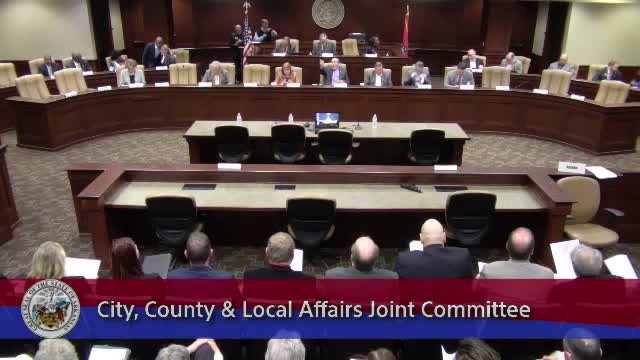
Craig Douglas, executive director of the Pulaski County Regional Recycling and Solid Waste District, told the Senate City, County & Local Affairs Committee that his district processed more than 880,000 waste tires in 2019 and that a recent Department of Environmental Quality decision to cut the per‑tire reimbursement by 10% — from $2.09 to $1.88 — threatens the viability of current collection and processing arrangements.
Douglas said the cut could reduce revenue for the district’s long‑term contractor, Davis Rubber Company, by about $175,000 based on 2019 volumes. To absorb the shortfall, Pulaski reduced its publicly supported tire collection points from more than 25 to one per county (nine in the district), eliminated a $150 monthly trailer service fee to private retailers, and encouraged private negotiation of hauling rates. Douglas said the policy shift leaves the marketplace to set retailer hauling rates while the district continues to pay for hauling and processing at public collection centers.
Lawmakers pressed district staff on consequences. Representative Love described seeing tires dumped in ditches in Pulaski County and said he feared reduced collection access would increase illegal dumping. Douglas said there were no fully documented increases as of the hearing but acknowledged the risk and said cleanups require a police report for DEQ reimbursement requests. Frank Kavanaugh and others questioned whether raising the used‑tire rim‑removal fee from $1 to $3 (a proposal Douglas suggested) would generate the revenue districts need; Douglas estimated a statewide $3 fee applied across used‑tire transactions could add roughly $700,000–$1,000,000 and could fund a proposed extra‑large (XL) tire program estimated at $635,000 annually, but he cautioned it would not fully resolve structural shortfalls.
Melissa Rivers, executive director of the East Arkansas Regional Solid Waste Management District, described higher transport and cleanup costs in rural areas and said her district’s approved business‑plan cost was $2.89 per tire and that when certain cleanup costs are included the average can reach about $3.33 per tire. Rivers said districts must carry large cash outlays (she cited roughly $250,000 per quarter for operations) and warned that an announced 10% reduction in ADEQ reimbursements would “eliminate our district’s financial ability to deliver this program to our communities.”
Jan Smith of the White River Planning and Development District described a rural model that relies on a tire monofill near Bald Knob, which is nearing capacity; White River reported reimbursed volumes (248,467 tires in 2019) and a 2019 operating cost figure the district said was $667,199 with a program deficit of roughly $75,848. Smith said moving to alternative processors (shredders, tire‑derived fuel kilns or other contractors) would increase costs for her district.
Multiple committee members and presenters urged clearer enforcement and collection by the Department of Finance and Administration for rim‑removal fees and better alignment of the funding formula with actual costs revealed by business plans and Regulation 36. The chair suggested exploring a one‑time state appropriation to address longstanding tire dumps and said the committee would convene follow‑up meetings with ADEQ and DF&A.
Ending: The committee received testimony from three district leaders, asked staff to coordinate follow‑up briefings with ADEQ and DF&A, and did not take formal legislative action at the hearing.