Get Full Government Meeting Transcripts, Videos, & Alerts Forever!
Get email alerts on the Water Infrastructure topic
No spam. Unsubscribe anytime.
Senate committee advances water-provider reform requiring rate studies and limited outside-customer representation
Summary
After extensive testimony from utilities, local officials and residents, the Senate City, County & Local Affairs Committee passed SB 481, which mandates five-year rate studies, limited board training and a petition-triggered representation process for county customers served by municipal systems; proponents said it addresses long-term underfunding, while municipal groups warned of added bureaucracy.
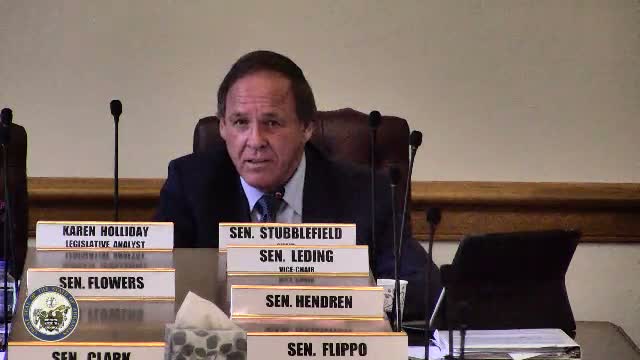
Senators on the City, County & Local Affairs Committee voted to pass Senate Bill 481 after hours of testimony from local officials, utilities and residents who described aging infrastructure and chronic underfunding of water providers. The bill would require water utilities to conduct a rate study at least every five years, prohibit selling water below cost, mandate limited training for board members with a possible grandfather exemption, and create a process for county customers who receive water from a city to seek representation on their water board under certain conditions.
Sponsor Senator Alan Clark framed the bill as the product of an 18-month task force and a response to a statewide assessment of problems. Clark told the committee the task force found many small systems were not setting rates sufficiently to cover long-term maintenance, which left utilities unable to replace pumps, lines and tanks; he said the task force estimated a very large share of systems were financially unsustainable. "We found out that it's estimated that 85% of our water providers are upside down financially," Clark said, explaining the proposed mandates are aimed at forcing utilities to plan for long-term infrastructure needs.
Supporters — including task-force co-chair Representative Lemons, consumer representative Barry Haas, and several county residents — described local examples of failing systems, broken meters and unpaid wholesale balances that have left county residents without representation or recourse. Gerald Black, a justice of the peace from Hot Spring County, said a small city serving many county customers lacked a mechanism for those customers to have input and that the bill’s representation provision could prevent unwanted sales of local systems to private companies.
Opponents and implementers raised constitutional and practical concerns. Tim Nylander, Fayetteville utilities director, urged caution, saying the bill's provision allowing a county judge to appoint a representative for city-run systems raised potential jurisdictional questions and should be vetted with the attorney general. Mark Hayes of the Arkansas Municipal League supported the fiscal elements — rate studies and training — but opposed creating a mandatory commission, calling that approach an added layer of bureaucracy and urging instead stronger required public hearings and customer outreach.
Several witnesses and utility managers urged clarifications during implementation. Daniel Dawson (Searcy Water Utilities) asked that local approval remain part of rate-setting and proposed grandfathering long-tenured board members from new training requirements. State agency testimony from the Arkansas Natural Resources Commission indicated ANRC did not support the bill as drafted, citing concerns about particulars of implementation.
After debate the committee recorded a roll-call summarized by the chair as passing SB 481 by a 5–1 margin. Sponsors said technical and clarifying amendments — for example, language about grandfathering long-serving board members from training or firming up the petition and appointment mechanics for outside-customer representation — may be filed before the bill moves to the next stage.
The committee's action sends SB 481 forward with the promise of follow-up fixes; supporters said the bill is intended to force utilities to set sustainable rates and invest in maintenance, while opponents warned about constitutional questions and new governance layers.