Get Full Government Meeting Transcripts, Videos, & Alerts Forever!
Get email alerts on the Utility Rates topic
No spam. Unsubscribe anytime.
PSC staff outlines Summit Utilities settlement; lawmakers demand probe of deferred maintenance and due diligence
Summary
PSC staff told the committee a settlement in the Summit Utilities rate case would raise the average residential gas bill from about $65 to $80; legislators pressed on $300M–$500M in plant work, removal of about $850M goodwill, and approved a motion requesting an investigative report on deferred maintenance, due diligence and rate impacts.
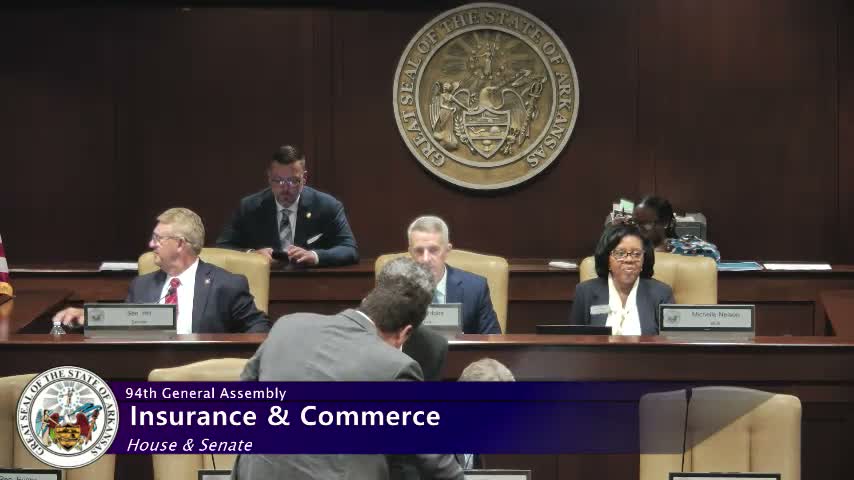
Representatives of the Arkansas Public Service Commission (PSC) and the PSC general staff briefed the Senate Insurance & Commerce Committee on the ongoing Summit Utilities rate case and a settlement agreement filed Oct. 7.
PSC staff explained the mechanics of a rate case—revenue requirement components (operation & maintenance, depreciation, taxes and return on rate base), the ten‑month statutory clock for utility dockets and the commission’s duty to set "just and reasonable" rates under Title 23 of the Arkansas Code. Staff said Summit filed its application Jan. 20 and that the PSC’s evidentiary hearings were held in October. The deadline for the commission to issue an order on the requested rates is Nov. 22.
Michael Marchand of the PSC general staff described the settlement parties (PSC general staff, Summit Utilities, the Attorney General, Arkansas Gas Consumers, and Hospitals & Higher Education Group) and said a settlement is not binding on commissioners. Director Marchand and staff explained rate‑base calculations, used‑and‑useful tests, and how plant additions and depreciation affect revenue requirements.
Staff told legislators the settlement would produce an average residential bill increase of roughly $15 (from about $65 to $80); staff said the settlement reduced the company’s weighted average cost of capital by excluding approximately $850,000,000 of acquisition goodwill from the rate base calculation. Members asked about reported capital work the company said it has done (committee discussion referenced $300M–$500M in plant additions) and whether much of that work was federally mandated safety work or the result of deferred maintenance prior to Summit’s purchase of CenterPoint assets.
Legislators repeatedly questioned whether CenterPoint deferred required maintenance and whether Summit performed adequate due diligence before buying the system; they pressed the PSC to consider prudence (whether costs were reasonable and necessary) and to weigh implementation timing to reduce short‑term consumer pain. PSC staff said prudence is a statutory consideration, that the commission may use tools such as deferred implementation, and that any decision must be grounded in evidence in the docket record.
Senator Hickey moved that the PSC develop an investigative report addressing deferred maintenance, mandates passed to ratepayers, the purchaser’s due diligence, and any recommended statutory changes; the motion carried without objection. PSC representatives agreed to provide additional information and to coordinate with the committee as the commission approaches its November decision date.
The committee did not direct the PSC to a specific vote outcome; commissioners said they remain in deliberation and that settlement adoption, modification or rejection depends on what the record and deliberations support.