Get Full Government Meeting Transcripts, Videos, & Alerts Forever!
Get email alerts on the Rural Hospital Finance topic
No spam. Unsubscribe anytime.
Hospital CEO warns rural Arkansas hospitals are losing money on basic care; maternal services at risk
Summary
North Arkansas Regional Medical Center presented data showing rising operating costs outpacing collections, stale Medicaid/Medicare fee schedules, cuts to program funding and threats to maternal and emergency services in rural communities.
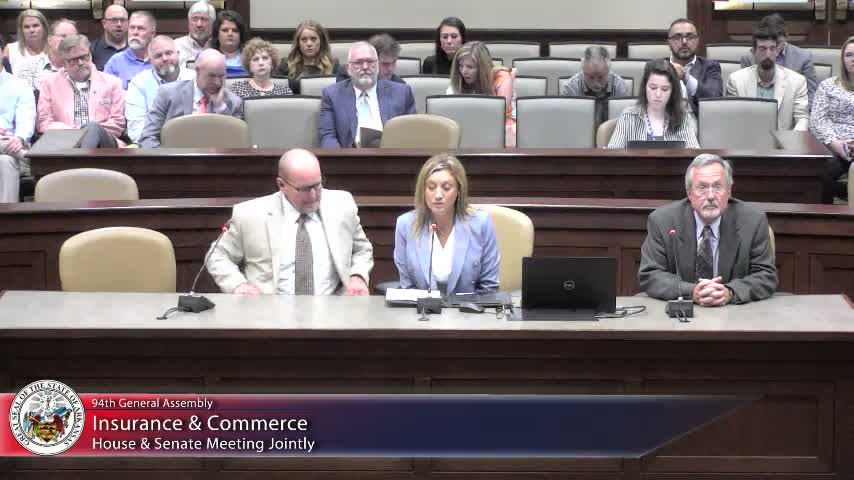
Sammy Robertson, CEO of North Arkansas Regional Medical Center, told the Insurance & Commerce committee that rural hospitals across the state face mounting financial pressures as payer rates fail to cover basic costs.
Robertson said NARMC is a not‑for‑profit, 174‑bed community hospital serving more than 95,000 people across five counties and that the organization will deliver about 500 babies this year. He said while gross revenue increased in the prior year, net revenue — the money actually collected — lagged because state and federal payers have not kept pace with rising costs for wages, supplies and benefits.
Robertson highlighted several specifics: Arkansas Medicaid inpatient daily rates were last changed in 2007 (cited in testimony) and outpatient Medicaid rates for ER visits have not been updated in decades. He gave a facility example that an implantable device priced at about $1,200 was reimbursed by the facility’s payer at roughly $300, leaving the hospital to absorb the difference.
He also described clinical performance improvements, including better stroke care: the facility’s average door‑to‑needle time for stroke fell from 65.8 minutes in 2016 to 46.5 minutes in 2023, with a fastest time of 24 minutes. Robertson warned, however, that cuts to supporting program funding (he cited a recent 33% cut to an Arkansas Saves grant) and ongoing reimbursement shortfalls risked eroding services such as obstetrics and neonatal care.
Lawmakers asked about payer mix and profitability. Robertson said about 60–70% of NARMC’s volume is state or federal payers and that Medicare Advantage plans and commercial payers with reduced fee schedules are adding administrative burdens (prior authorizations and denials). He urged a combination of state, federal and commercial adjustments to sustain programs: "It's not the state can't absorb all of it... we need a piece of each pie," Robertson said.
The committee requested financial breakouts and welcomed follow‑up from NARMC to provide more detailed cost and payer‑mix data. No formal committee action was taken during the hearing.