Get Full Government Meeting Transcripts, Videos, & Alerts Forever!
Get email alerts on the Healthcare Reimbursement topic
No spam. Unsubscribe anytime.
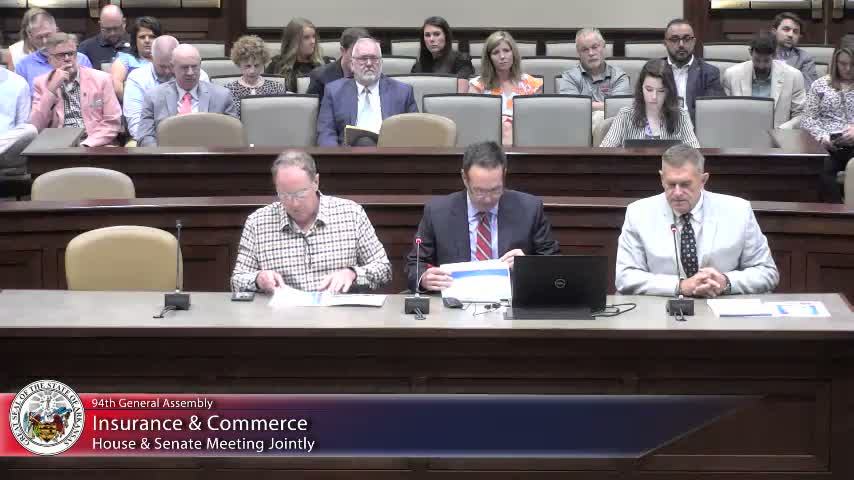
Arkansas ER physicians tell Senate committee No Surprises Act left them underpaid, call for electronic IDR process
Summary
Three physician‑owners described steep, unexplained cuts to commercial reimbursements since the No Surprises Act, lengthy independent dispute resolution delays, and urged the legislature to require an electronic IDR workflow and greater state oversight to protect rural access.
Three physician‑owners testified to the Senate Insurance & Commerce committee that commercial payers are paying dramatically less for emergency care after the federal No Surprises Act and that the state should act to reduce paperwork and delay.
Dr. Charles Mason, a physician and partial owner of Cabot Emergency Hospital, told lawmakers he and his partners provide emergency care to roughly 30,000 Arkansans a year and employ about 120 people but are increasingly treated as out‑of‑network providers. "We are not asking for big pay raises... we're just trying to get some sort of consolidation so that we can get paid as well as other hospitals have," Mason said.
Dr. Justin White, chief medical officer and owner at a Fort Smith facility, told the committee that the No Surprises Act (effective Jan. 1, 2022) and its implementation around the Qualified Payment Amount (QPA) have “essentially been weaponized,” in his view, leaving providers paid at an "exorbitantly low" QPA that is not publicly disclosed. He described the Independent Dispute Resolution (IDR) process as cumbersome, paper‑heavy and slow, saying claims frequently take three to six months to adjudicate and sometimes nine to 12 months. "It feels like a shell game," White said, describing repeated back‑and‑forth by fax, email and mail.
Dr. John Weddle, owner at the Cabot and sister Fort Smith facilities, added concrete examples: he and colleagues said coding changes and insurer downcoding have reduced average reimbursements — one source cited in testimony estimated a 32% average drop for some services after the No Surprises Act took effect. Weddle said providers often must appeal downcoding through IDR and that when they do, the process typically favors providers but is too slow to be an efficient remedy.
The physicians recommended state action to standardize and speed the IDR process. They pointed to electronic platforms used in Texas and New Mexico (for example, Availity) that can initiate negotiations immediately and cut weeks from the current exchange of faxes and mailed documents. "If legislatively the IDR process for out‑of‑network providers were required to be electronic, that would help," White told the committee.
Lawmakers pressed witnesses on which payers were most problematic; the physicians cited Arkansas Blue Cross Blue Shield, United and Humana among major commercial payers in their markets. They also warned that continued low commercial reimbursement and administrative burdens risked losing physicians and services in rural areas and cited an example that the clot‑busting drug tPA can cost hospitals about $10,000 while testimony reported reimbursements in the $750–$1,000 range for that medication.
The committee took the testimony as a policy prompt; Insurance Commissioner Alan McClain later encouraged providers to file complaints with his office and said the department can examine insurer practices, issue rules and conduct audits.
The hearing closed the physician panel without a formal vote on a bill. The committee asked staff to follow up with supplemental materials from presenters and invited insurers to testify in a future session.