Get Full Government Meeting Transcripts, Videos, & Alerts Forever!
Get email alerts on the Prior Authorization topic
No spam. Unsubscribe anytime.
Senate committee advances gold-card prior-authorization bill after divided testimony
Summary
The Senate Insurance & Commerce Committee passed House Bill 1271, a "gold card" prior-authorization bill that would exempt high-performing providers from routine prior authorizations; insurers and pharmacy benefit managers warned the mandate could increase utilization and costs.
Senator Missy Irvin (District 24) and Representative Lee Johnson (District 47) led the Insurance & Commerce Committee through debate on House Bill 1271, a proposal to create a "gold card" for health-care providers whose prior-authorization requests are approved at a high rate. Sponsors said the program, modeled on laws in other states, would streamline administrative burdens for clinicians and insurers.
"This bill ... creates a gold card program," Senator Missy Irvin said, explaining that providers meeting the approval threshold would not have to pursue routine prior-authorizations. Representative Lee Johnson said the program is designed for providers who can demonstrate consistent, appropriate ordering and noted a 90% approval-rate benchmark was being used as a working example.
Opponents told the committee the bill risks unintended cost growth. Jonathan Buxton of the Pharmaceutical Care Management Association testified, "We are speaking in opposition to the bill today," arguing prior authorization can guide patients and clinicians to lower-cost or more effective care and warning a one-size-fits-all mandate would be counterproductive. Derek Smith, an attorney representing America's Health Insurance Plans (AHIP), said insurers remain concerned that a statutory mandate could increase utilization and premiums and criticized appeal provisions that, in his account, require carriers to pay for appeals and expose them to sanctions based on differing samples.
Sponsors said they worked with stakeholders and made multiple amendments to address concerns. Representative Johnson told the committee that the measure will not apply to pharmacy benefit managers (PBMs) until January 1, 2025, to allow time to resolve industry-specific issues, and that the Legislature could revisit and refine the program in future sessions.
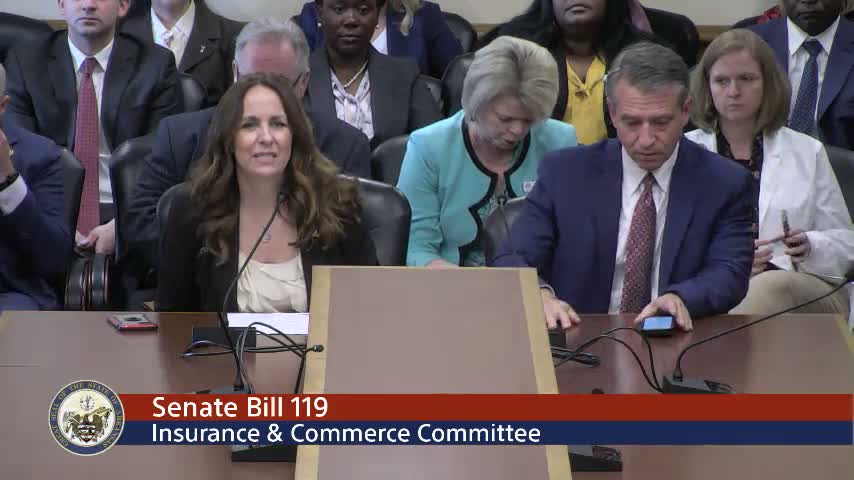
After questions from committee members and public testimony, Senator Boyd moved for a do-pass recommendation, seconded by Senator Johnson. The committee approved the motion by voice vote and the chair announced the bill was passed out of committee. The bill will next proceed to floor consideration under the amendments adopted in committee.
What happens next: The committee approved the bill as amended and sponsors said they expect to monitor and adjust the program during implementation. Additional statutory clarifications and further technical edits were discussed as likely follow-ups.