Get Full Government Meeting Transcripts, Videos, & Alerts Forever!
Get email alerts on the Prescription Drug Costs topic
No spam. Unsubscribe anytime.
Senate committee advances bill to ensure patient assistance coupons count toward cost‑sharing
Summary
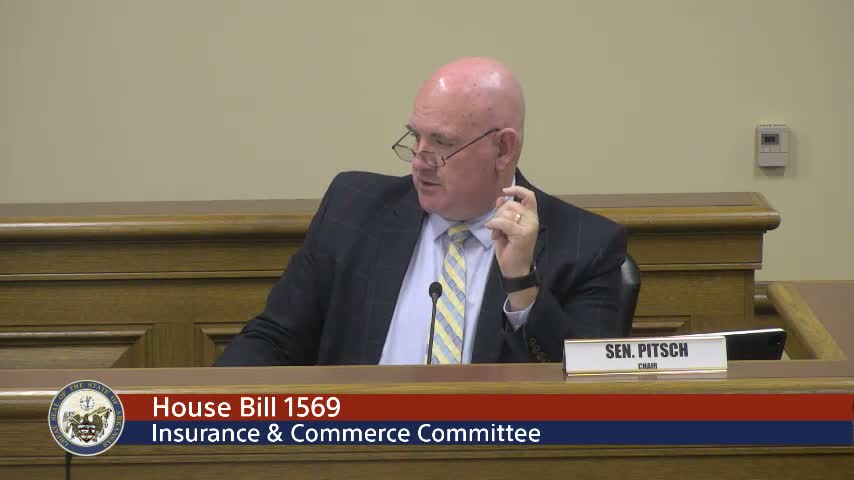
The Senate Insurance & Commerce Committee voted to pass House Bill 1569, which would require insurers and PBMs to apply the value of manufacturer patient assistance coupons to enrollees’ copayments, coinsurance and deductibles, with carve‑outs for Medicaid, Medicare and self‑insured plans.
The Senate Insurance & Commerce Committee on Thursday voted to pass House Bill 1569, a measure intended to make sure manufacturer patient‑assistance coupons reduce a patient’s out‑of‑pocket cost rather than becoming a source of revenue for pharmacy benefit managers. Sponsor Senator Raper told the committee the bill “places the value of a patient financial assistance where it belongs with the patient and not the PBM.”
The measure requires that amounts paid by or on behalf of a patient — including manufacturer co‑payment coupons — be applied to an enrollee’s copayment, coinsurance, deductible or other cost‑sharing obligation, and not be retained for the financial benefit of a PBM. Raper and supporters said the bill excludes Medicaid (including Medicaid expansion), federal Medicare plans (which do not permit coupons) and certain state employee plans or self‑insured employer plans.
Opponents from the insurance industry warned the bill could shift utilization toward higher‑cost brand medicines when lower‑cost generics are available. Derek Smith, representing America’s Health Insurance Plans, cited a 2014 Office of Inspector General bulletin and Congressional Research Service research and argued coupons "may cause physicians and beneficiaries to choose an expensive brand name drug when a less expensive and equally effective generic or alternative is available." Smith asked the committee for an exclusion when a lower‑cost generic is available.
Pharmacists and patient advocates countered that coupons help patients afford necessary drugs and that the sponsor’s amendments protect against misuse. John Vinson, a pharmacist and head of the Arkansas Pharmacists Association, described how coupons are processed: the insurer is billed first and a manufacturer claims processor applies the coupon as secondary payment, reducing the patient’s immediate out‑of‑pocket expense. Leo Hauser, local counsel for PhRMA, criticized PBM practices that he said keep negotiated discounts from reaching consumers.
The committee adopted a clarifying amendment early in the hearing that the sponsor said ensures state‑run plans are excluded, then moved and seconded a do‑pass motion. The committee approved the bill as amended by voice vote.
What’s next: The bill advances from the committee as amended and will move to the full Senate calendar for further consideration.