Get Full Government Meeting Transcripts, Videos, & Alerts Forever!
Get email alerts on the ADFA Reform topic
No spam. Unsubscribe anytime.
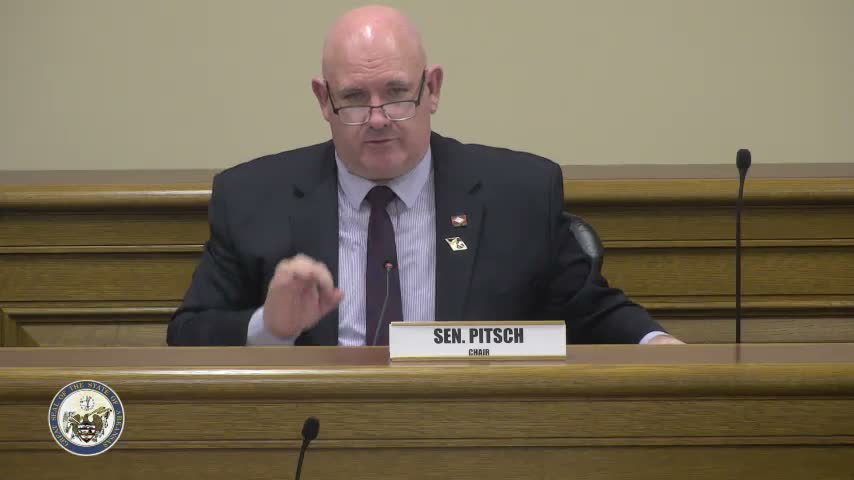
Senate hearing on ADFA: sponsor to amend bill after debate over board makeup and tax-credit distribution
Summary
Sen. Sullivan's amended SB 475 would reconstitute the ADFA board and direct low-income housing tax credits to be distributed by congressional district; ADFA officials expressed reservations about congressional districts as the allocation unit and urged more data-driven outreach; sponsor agreed to revise language and return Thursday.
Senator Sullivan presented amendments to SB 475 intended to change the appointment process for the Arkansas Development Finance Authority and to require distribution of certain low-income housing tax credits by congressional district. "It distributes the money in an equitable manner between the 4 congressional districts," Sullivan said, arguing his district had been underrepresented and that legislative oversight needed to be strengthened.
ADFA President Brian Scroggins and Matt Barker (general counsel and vice president in charge of multifamily housing) testified with concerns about whether congressional districts align with housing need and about how the qualified allocation plan (QAP) and developer-driven application process currently determine awards. Barker noted federal law requires states to consider project location but does not define how that must be achieved. "Federal law does require the states to take location, project location, into account," Barker said, "but it's unclear what they mean by that."
Committee members pressed for more relevant data—how many applications came from each district, how many awards were made, and whether outreach could increase applications from underrepresented areas. Sponsor Sullivan told the committee he had 10 months to seek solutions and had concerns about outcomes and board responsiveness; he agreed to work with members to add low-income-housing expertise to appointments and to refine language on district representation and confirmation.
After extended debate, the sponsor pulled the bill to allow revisions and said he would return with amended language on Thursday. The chair scheduled the bill to be heard again pending changes.